



- View
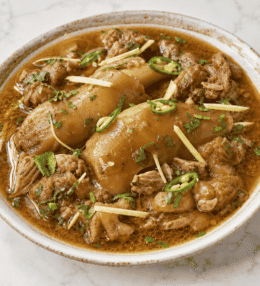
Bannu beef pulao is a rice dish from Bannu in southern Khyber Pakhtunkhwa, Pakistan. The beef simmers until tender, then its stock becomes the cooking liquid for the rice. The finished grains should stay separate, with the flavour of beef and browned onion running through the whole platter.
This home version uses beef shin on the bone, aged basmati and whole spices. It serves four with raita or a simple onion and tomato salad. Allow a little over three hours, much of it spent simmering the beef. The rice can soak and the onion can brown while the stock cooks.
What Is Bannu Beef Pulao?
The cooking liquid is called yakhni, a stock made by simmering meat with aromatics. Once the beef is tender, the stock is strained and measured into the rice pot. The beef goes back in with the browned onion and green chilli, so the meat and rice finish together.
The last stage is called dum. Once the liquid drops to the level of the rice, a tight fitting lid traps steam over low heat. A short rest with the lid still on lets the moisture settle, making it easier to lift the grains apart without breaking them.
Ingredients and Taste
Beef shin has connective tissue that softens during a gentle simmer, giving the yakhni more body. Ask for thick cross sections with a good amount of meat around the bone. Pieces of roughly the same size make it easier to portion the dish and judge when the beef is ready.
Black cardamom brings a little smokiness to the stock, while cumin, coriander and fennel add warmth. Straining the stock removes the whole spices so they flavour the rice without leaving cloves or cardamom pods in each serving.
The sliced onion should turn golden before the beef goes into the rice pot. Its sweetness softens the bite of the green chillies, and ghee gives the rice a fuller aroma. A spoonful of cucumber raita alongside cools the chilli and balances the richness of the beef.
A Taste of History
Bannu gives the pulao its name. The Khyber Pakhtunkhwa government’s guide to Bannu food describes it as a signature dish served at weddings and festivals. That association makes sense when you see it served on a large platter, with the bigger pieces of beef lifted onto the rice for everyone to share.
There is more than one way to cook it. The district guide includes a version with yoghurt and tomatoes, while another published Pakistani recipe uses sella rice and dried plums. The version here follows the approach of cooking aged basmati in strained yakhni, with golden onion and green chilli for the final seasoning.
How to Make Bannu Beef Pulao
Start the yakhni first and wait until the beef is close to tender before soaking the basmati. Use a heavy pot with a tight fitting lid for the rice so you can switch from an uncovered simmer to gentle steaming without changing pans. See the recipe card at the bottom for exact ingredient quantities and printable cooking instructions.
Ingredients
For the beef yakhni
- Beef shin on the bone
- Water
- Onion
- Garlic
- Fresh ginger
- Black and green cardamom pods
- Cloves
- Cinnamon stick
- Bay leaf
- Black peppercorns
- Cumin seeds
- Coriander seeds
- Fennel seeds
- Fine sea salt
For the pulao
- Aged white basmati rice
- Water for rinsing and soaking
- Ghee
- Onion, thinly sliced
- Green chillies, slit lengthways
- Cooked beef and strained yakhni
- Fine sea salt, if needed
To serve
- Plain yoghurt or cucumber raita, optional
- Onion and tomato salad, optional
- Lemon wedges, optional
Cooking Instructions
Step 1: Start the Yakhni
Put the beef, quartered onion, garlic, ginger, whole spices and salt in a heavy saucepan. Add the water and bring it up to a simmer. Skim off any foam, then partly cover the pan and turn the heat down so the stock bubbles gently.
Step 2: Cook the Beef and Soak the Rice
Simmer until a fork slides into the thickest piece without much resistance. Keep enough liquid in the pan to cover the meat, topping up with hot water as needed. When the beef is close to tender, rinse and soak the rice. Drain it thoroughly once the soak is finished, even if the beef needs longer.
Step 3: Strain and Measure the Stock
Lift the beef out and keep it covered while you finish the pulao. Strain the stock through a fine sieve. Measure the portion for the rice and keep a little extra hot in case the pan dries before the grains are tender. Save any remaining stock for another meal.
Step 4: Brown the Onion and Add the Beef
While the yakhni finishes, heat the ghee in the rice pot and fry the sliced onion until evenly golden. Once the stock is strained, add the cooked beef and green chillies. Turn gently to coat, then pour in the measured yakhni and bring it to a simmer. Taste for salt before adding the rice.
Step 5: Cook the Rice and Steam on Dum
Add the drained rice and spread it evenly around the beef with a spoon. Simmer uncovered until the liquid drops to the level of the grains and small holes appear on the surface. Cover tightly, turn the heat down to its lowest setting and leave the rice to finish in the steam.
Step 6: Rest and Serve
Check that a grain is tender. If the rice is still firm and the pot is dry, add a little hot reserved stock and cover again briefly. Once ready, turn off the heat and leave the lid on for a short rest. Lift the beef out, fluff the rice gently and arrange the meat on top. Serve with raita, salad or lemon wedges.
Variations and Substitutions
Beef cuts: Beef shoulder or short ribs on the bone also work. Choose pieces with enough meat for four and check them with a fork, as they may soften at a different rate. Boneless chuck is an option; adding a marrow bone to the stock will give it more richness.
Rice: This method is written for aged white basmati. Sella is parboiled basmati and may need a different soak and more cooking liquid. If using it, follow the packet or use a method written specifically for sella.
Ghee and spices: Use a neutral oil if you don’t have ghee. Leave out the black cardamom if you can’t find it; the stock will lose some smokiness. For less heat, leave the green chillies whole or omit them.
Cooking Tips for Bannu Beef Pulao
Taste the measured yakhni after it goes into the rice pot. It should taste well seasoned, but if it already tastes too salty to sip, dilute it with a little unsalted water and remeasure before adding the rice.
Use the surface of the rice to judge when to put the lid on. Covering while the grains are still swimming in stock can leave the pulao wet. Waiting until the pot is completely dry can make the bottom catch before the rice has softened.
How to Store and Reheat Bannu Beef Pulao
Storing
Divide leftover beef and rice between shallow containers so they cool quickly, ideally within one hour. Refrigerate promptly and eat within 24 hours. Avoid leaving the pulao to cool in the cooking pot.
Freezing and Defrosting
Cool the portions quickly and freeze within one hour of cooking. Defrost fully in the fridge and use within 24 hours of thawing.
Reheating
Reheat once, until the beef and rice are steaming hot throughout. A splash of water and a lid help loosen the rice on the hob. Serve straight away.

Bannu Beef Pulao (Beef Rice Pilaf)
Ingredients
Beef Yakhni
- 700 g beef shin on the bone cut into thick cross sections about 4 to 5 cm thick
- 1.5 litres water plus hot water if needed to keep the beef just covered
- 1 medium onion peeled and quartered
- 6 garlic cloves lightly crushed
- 25 g fresh ginger sliced
- 2 black cardamom pods
- 4 green cardamom pods
- 5 cloves
- 1 cinnamon stick about 3 cm long
- 1 bay leaf
- 1 tsp black peppercorns
- 1 tsp cumin seeds
- 1 tsp coriander seeds
- 1 tsp fennel seeds
- 6 g fine sea salt
Pulao
- 350 g aged white basmati rice weighed dry
- Cold water for rinsing and soaking
- 45 ml ghee
- 1 large onion thinly sliced
- 2 green chillies slit lengthways
- Cooked beef from the yakhni
- 600 ml strained yakhni plus up to 60 ml held back for topping up if needed
- Up to 3 g fine sea salt only if needed
Optional Accompaniments
- Plain yoghurt or cucumber raita
- Onion and tomato salad
- Lemon wedges
Instructions
- Put the beef, quartered onion, garlic, ginger, all the whole spices and 6 g salt in a heavy saucepan. Add 1.5 litres water, bring to a boil and skim off any foam. Reduce to a gentle simmer and partly cover.
- Start checking the beef after 90 minutes and allow about 2 hours for planning. It should be fork tender and hold its shape. Continue simmering if it is still firm, adding hot water as needed to keep it just covered. When the beef is nearing tenderness, rinse the basmati in cold water, soak for 30 minutes and drain thoroughly. If the beef is running late, drain the rice after 30 minutes anyway.
- Lift out the beef and keep it covered while preparing the rice. Strain the stock and discard the spent aromatics and spices. Measure 600 ml for cooking and keep up to 60 ml extra hot for adjustments. If short of the initial 600 ml, add just enough hot water to reach it. Reserve surplus stock separately.
- During the final 12 to 15 minutes of the beef simmer, heat the ghee in the rice pot over medium heat. Fry the sliced onion until evenly golden, stirring often. Take the pot off the heat if the onion is ready before the beef. Return to medium heat, add the cooked beef and green chillies, and turn gently for 2 to 3 minutes. Add the measured 600 ml yakhni and bring to a lively simmer. Taste and add up to 3 g salt if needed.
- Add the drained basmati and spread it evenly. Simmer uncovered for about 6 to 10 minutes, until the stock drops to the level of the rice and small steam holes appear. Turn the heat to its lowest setting and cover tightly. Steam for about 15 minutes.
- Taste a grain from near the centre. If it is still firm and the pan is dry, add 30 ml hot reserved stock or hot water around the edge. Cover and cook on low for another 3 to 5 minutes, then check again. Repeat with the remaining reserved stock only if needed. Once the rice is tender, take the pot off the heat and rest, covered, for 10 minutes. Lift out the beef, fluff the rice gently and place the beef on top. Serve hot with any of the optional accompaniments.
Leave a Review