



- View
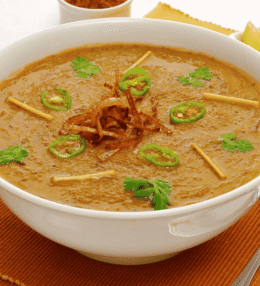
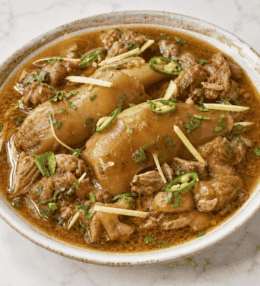
Nihari is a deeply flavoured meat stew closely associated with Pakistani food culture, particularly in cities such as Karachi, Lahore and Rawalpindi. Beef is cooked slowly until tender, while the gravy becomes rich, glossy and intensely savoury. It is usually served with naan, ginger, coriander, green chilli and lemon.
Although nihari can now be eaten throughout the day, it has a strong connection with breakfast and weekend gatherings. A steaming bowl placed in the centre of the table invites everyone to tear pieces of naan, dip them into the gravy and add fresh garnishes according to their own taste.
Its appeal comes from patience rather than complicated presentation. Long cooking softens tougher cuts of beef and allows the meat, spices and cooking juices to enrich the sauce. The result is hearty and satisfying, with a depth of flavour that develops gradually during the long, gentle simmer.
What Is Nihari?
Nihari is a slow cooked meat stew traditionally prepared with cuts that benefit from several hours of gentle cooking. Beef shin or shank is particularly popular in Pakistani versions because its connective tissue softens over time and naturally gives the gravy a fuller body.
The stew is generally prepared in a large pot with ghee or oil, onion, ginger, garlic and a fragrant mixture of spices. Water is added and the beef is simmered slowly until it can be separated easily with a spoon. A flour mixture is often stirred in towards the end to create the smooth consistency associated with nihari.
One of the defining features of nihari is the contrast between its slow cooked gravy and fresh garnishes. Fine strips of ginger add sharpness, coriander provides freshness, green chillies bring extra heat and lemon juice cuts through the richness. Warm naan or khameeri roti is commonly served alongside.
Some long established nihari restaurants preserve a practice known as taar, where a small quantity of the previous batch is carried into the next pot. The technique is particularly associated with historic nihari shops in Old Delhi and is said to give each fresh batch a deeper, developed flavour.
Ingredients and Taste
Beef shin or shank works particularly well for Pakistani nihari because it becomes tender without falling apart too quickly. Pieces containing some bone can add further richness. Ghee provides the traditional cooking fat, while onion, ginger and garlic create the savoury base of the gravy.
The spice mixture varies between cooks and families, but common ingredients include coriander seed, cumin, fennel, black pepper, cloves, green and black cardamom, cinnamon, mace and nutmeg. Dry ginger is also frequently included, while chilli provides warmth without overwhelming the flavour of the beef.
Wheat flour is commonly used to thicken nihari. Atta, the wholemeal flour normally used for chapati, works especially well and gives the gravy a smooth, substantial texture. The flour is mixed with water before being stirred into the pot, which helps prevent lumps from forming.
A well prepared nihari tastes deeply savoury with warming spice rather than aggressive heat. Fennel provides a faint sweetness, black pepper and ginger bring warmth, while cardamom, cinnamon and mace add fragrance. Fresh lemon and coriander brighten the finished dish and balance the richness of the beef.
Texture is just as important as flavour. The beef should be tender enough to separate easily with a spoon while still remaining in recognisable pieces. The gravy should coat the meat without becoming heavy or paste like, remaining loose enough to be absorbed easily by warm naan.
A Taste of History
The exact birthplace of nihari remains debated. Many accounts place its development in late eighteenth century Delhi, while others connect the dish with the royal kitchens of Awadh around Lucknow. The surviving histories do not establish a single origin beyond dispute.
The name nihari is generally linked to the Arabic word nahar, meaning day. This reflects its historical association with morning meals. The dish was traditionally cooked slowly for several hours, sometimes overnight, allowing it to be ready for breakfast after the morning prayer.
Stories connecting nihari directly with Mughal emperors are often repeated, but many are better treated as culinary tradition rather than firmly documented history. What is clearer is that the dish developed within the Muslim food culture of northern India before becoming closely associated with Pakistan.
Following Partition in 1947, Urdu speaking Muslim migrants from Delhi and other parts of northern India brought their nihari traditions to Pakistan. Karachi became particularly important to the dish, with specialist nihari shops developing in neighbourhoods where migrant communities had settled.
From Karachi, nihari became firmly established across the Pakistani food landscape. Today it is widely enjoyed in Lahore, Rawalpindi and many other cities, both at specialist restaurants and at home. Breakfast remains strongly associated with the dish, although it is now commonly eaten at almost any time of day.
How to Make Nihari
Traditional Pakistani nihari rewards slow cooking. The beef should become exceptionally tender while the spiced gravy remains rich, silky and loose enough to scoop up with naan. Give the meat plenty of time and avoid rushing the simmer. See the recipe card at the bottom for printable directions
Ingredients
For the Nihari
• 800 g beef shin or shank, cut into large pieces, preferably with some bone
• 4 tbsp ghee
• 1 large onion, thinly sliced
• 1 tbsp ginger paste
• 1 tbsp garlic paste
• 1½ tsp salt, or to taste
• 1 tsp Kashmiri chilli powder
• ½ tsp turmeric powder
• 1.2 litres hot water
• 3 tbsp atta, wholemeal chapati flour
• 100 ml cool water, for mixing with the flour
For the Nihari Masala
• 2 tsp coriander seeds
• 1½ tsp cumin seeds
• 1 tsp fennel seeds
• 1 tsp black peppercorns
• ½ tsp cloves
• 4 green cardamom pods
• 1 black cardamom pod
• 1 small cinnamon stick
• 1 star anise
• 1 small piece mace
• ¼ tsp grated nutmeg
• ½ tsp ground ginger
For Serving
• 2 tbsp fresh ginger, cut into fine matchsticks
• 1 fresh green chilli, finely sliced
• Small handful fresh coriander, chopped
• 1 lemon, cut into wedges
• Fresh naan or khameeri roti
Cooking Instructions
Step 1: Prepare the Nihari Masala
Place the coriander seeds, cumin seeds, fennel seeds, peppercorns, cloves, green and black cardamom, cinnamon, star anise and mace in a spice grinder. Grind finely, then mix with the nutmeg and ground ginger. Set the prepared nihari masala aside.
Step 2: Brown the Onion
Heat the ghee in a heavy based cooking pot over a medium heat. Add the sliced onion and cook until evenly golden. Avoid taking it too dark because burnt onion can introduce bitterness into the gravy.
Step 3: Add the Ginger and Garlic
Stir the ginger paste and garlic paste into the onions. Cook for about 1 minute, stirring regularly, until the raw aroma softens. Keep the heat moderate so the garlic does not catch on the base of the pot.
Step 4: Brown the Beef
Add the beef shin or shank and increase the heat slightly. Cook for 6 to 8 minutes, turning the pieces occasionally so they colour lightly on each side. This develops extra savoury flavour before the long cooking stage.
Step 5: Add the Spices
Add the prepared nihari masala, Kashmiri chilli powder, turmeric and salt. Stir thoroughly so the spices coat the meat evenly. Cook for 2 to 3 minutes, stirring frequently, until the ghee becomes fragrant and the spices have started releasing their aroma.
Step 6: Slow Cook the Nihari
Pour in the hot water and stir well, scraping any spices from the bottom of the pot. Bring to a gentle boil, then reduce the heat to its lowest setting. Cover and cook for around 3 to 4 hours, checking occasionally, until the beef is exceptionally tender.
Step 7: Prepare the Flour Slurry
Place the atta in a bowl and gradually whisk in 100 ml of cool water until completely smooth. Make sure there are no lumps. Preparing the slurry separately helps the flour blend evenly into the gravy.
Step 8: Thicken the Gravy
Slowly pour the flour mixture into the nihari while stirring continuously. Simmer uncovered over a low heat for another 20 to 30 minutes, stirring occasionally, until the gravy becomes smooth and lightly thickened while still remaining easy to spoon.
Step 9: Rest the Nihari
Taste the nihari and adjust the salt if required. Turn off the heat, cover the pot and allow it to rest for about 15 minutes. This gives the gravy time to settle and allows some of the aromatic ghee to rise naturally towards the surface.
Step 10: Garnish and Serve
Ladle the hot nihari into deep bowls, making sure each serving contains tender beef and plenty of gravy. Scatter over fresh coriander, sliced green chilli and ginger matchsticks. Serve with lemon wedges and warm naan or khameeri roti.
Variations and Substitutions
Beef shin or shank is particularly well suited to Pakistani nihari because its connective tissue softens during slow cooking and gives the gravy natural richness and body. If neither is available, beef chuck can be used, although the finished gravy may be slightly less rich.
Some Pakistani households add one or two marrow bones alongside the meat. These release additional flavour and fat during the long cooking process, giving the gravy a fuller mouthfeel. They are optional and are not necessary for producing a good nihari at home.
Atta is commonly used to thicken nihari and gives the gravy a smooth, substantial consistency. Plain flour can be substituted if chapati flour is unavailable. Whichever flour you use, always mix it thoroughly with cool water before adding it to the pot.
Kashmiri chilli powder provides colour with relatively gentle heat. If it is unavailable, use a mild chilli powder with a little paprika. Avoid smoked paprika because its strong smoky flavour is not typical of traditional nihari.
Ghee contributes a rich buttery aroma that works particularly well with the spices. A neutral cooking oil can be used instead, although the flavour will be lighter. Some cooks use a combination of ghee and oil.
Lamb or mutton can also be prepared using a similar method. The required cooking time will vary according to the cut and age of the meat, so tenderness should be used as the main guide rather than relying only on the clock.
Cooking Tips for Perfect Nihari
• Choose beef shin or shank with connective tissue and, if possible, some bone. These cuts become tender during slow cooking and naturally enrich the gravy.
• Keep the nihari at a gentle simmer rather than a vigorous boil. Slow cooking gives the connective tissue enough time to soften properly.
• Grind the whole spices shortly before cooking whenever possible. Freshly ground nihari masala has a stronger aroma than spice blends that have been stored for long periods.
• Do not add dry flour directly to the cooking pot. Mix it with cool water first so the finished gravy remains smooth.
• Add the flour mixture gradually. Nihari should have a flowing, silky gravy rather than the consistency of a very thick curry sauce.
• Allow the beef to cook until genuinely tender. At home this usually takes around 3 to 4 hours, although traditional nihari may be cooked considerably longer over a very gentle heat.
• Let the finished nihari rest briefly before serving. The gravy settles during this time and the aromatic fat begins to rise naturally towards the surface.
• Nihari often develops an even deeper flavour after being refrigerated overnight, which makes it particularly suitable for preparing in advance.
• Add fresh ginger, coriander, green chilli and lemon just before serving. Their sharp, fresh flavours balance the slow cooked beef and warm spices.
How to Store and Reheat
Storing Nihari
Allow leftover nihari to cool promptly before transferring it to a clean, covered container. Refrigerate it within two hours of cooking and use refrigerated leftovers within 48 hours. If you are unlikely to eat it within that period, freezing is the better option.
Nihari freezes particularly well because the beef remains surrounded by gravy. Divide it into individual or family sized portions before freezing so you only defrost what you need. For best quality, use frozen nihari within about three months.
Keep fresh ginger, coriander, chillies and lemon separate from the stored nihari. These garnishes are at their best when freshly prepared and should be added after the dish has been reheated.
Defrosting Nihari
Transfer frozen nihari to the fridge and allow it to defrost thoroughly before reheating. Defrosting slowly in the refrigerator helps keep the meat and gravy at a safe temperature while preserving their texture.
Reheating Nihari
Reheat nihari on the hob over a gentle to medium heat, stirring regularly so the thick gravy does not catch on the bottom of the pan. Add a small splash of water if the gravy has become considerably thicker while chilled.
Continue heating until the beef and gravy are steaming hot throughout. Nihari can also be reheated in the microwave, but stir it partway through because thick sauces can develop cooler areas in the centre.
Only reheat leftovers once. Once the nihari is thoroughly hot, serve immediately and finish each bowl with fresh ginger, coriander, green chilli and lemon.

Nihari (Slow Cooked Beef)
Ingredients
For the Nihari
- 800 g beef shin or shank cut into large pieces, preferably with some bone
- 4 tbsp ghee
- 1 large onion thinly sliced
- 1 tbsp ginger paste
- 1 tbsp garlic paste
- 1½ tsp salt or to taste
- 1 tsp Kashmiri chilli powder
- ½ tsp turmeric powder
- 1.2 litres hot water
- 3 tbsp atta wholemeal chapati flour
- 100 ml cool water for mixing with the flour
For the Nihari Masala
- 2 tsp coriander seeds
- 1½ tsp cumin seeds
- 1 tsp fennel seeds
- 1 tsp black peppercorns
- ½ tsp cloves
- 4 green cardamom pods
- 1 black cardamom pod
- 1 small cinnamon stick
- 1 star anise
- 1 small piece mace
- ¼ tsp grated nutmeg
- ½ tsp ground ginger
For Serving
- 2 tbsp fresh ginger cut into fine matchsticks
- 1 fresh green chilli finely sliced
- Small handful fresh coriander chopped
- 1 lemon cut into wedges
- Fresh naan or khameeri roti
Instructions
Step 1: Prepare the Nihari Masala
- Place the coriander seeds, cumin seeds, fennel seeds, peppercorns, cloves, green and black cardamom, cinnamon, star anise and mace in a spice grinder. Grind finely, then mix with the nutmeg and ground ginger. Set the prepared nihari masala aside.
Step 2: Brown the Onion
- Heat the ghee in a heavy based cooking pot over a medium heat. Add the sliced onion and cook until evenly golden. Avoid taking it too dark because burnt onion can introduce bitterness into the gravy.
Step 3: Add the Ginger and Garlic
- Stir the ginger paste and garlic paste into the onions. Cook for about 1 minute, stirring regularly, until the raw aroma softens. Keep the heat moderate so the garlic does not catch on the base of the pot.
Step 4: Brown the Beef
- Add the beef shin or shank and increase the heat slightly. Cook for 6 to 8 minutes, turning the pieces occasionally so they colour lightly on each side. This develops extra savoury flavour before the long cooking stage.
Step 5: Add the Spices
- Add the prepared nihari masala, Kashmiri chilli powder, turmeric and salt. Stir thoroughly so the spices coat the meat evenly. Cook for 2 to 3 minutes, stirring frequently, until the ghee becomes fragrant and the spices have started releasing their aroma.
Step 6: Slow Cook the Nihari
- Pour in the hot water and stir well, scraping any spices from the bottom of the pot. Bring to a gentle boil, then reduce the heat to its lowest setting. Cover and cook for around 3 to 4 hours, checking occasionally, until the beef is exceptionally tender.
Step 7: Prepare the Flour Slurry
- Place the atta in a bowl and gradually whisk in 100 ml of cool water until completely smooth. Make sure there are no lumps. Preparing the slurry separately helps the flour blend evenly into the gravy.
Step 8: Thicken the Gravy
- Slowly pour the flour mixture into the nihari while stirring continuously. Simmer uncovered over a low heat for another 20 to 30 minutes, stirring occasionally, until the gravy becomes smooth and lightly thickened while still remaining easy to spoon.
Step 9: Rest the Nihari
- Taste the nihari and adjust the salt if required. Turn off the heat, cover the pot and allow it to rest for about 15 minutes. This gives the gravy time to settle and allows some of the aromatic ghee to rise naturally towards the surface.
Step 10: Garnish and Serve
- Ladle the hot nihari into deep bowls, making sure each serving contains tender beef and plenty of gravy. Scatter over fresh coriander, sliced green chilli and ginger matchsticks. Serve with lemon wedges and warm naan or khameeri roti.
Leave a Review