


- View
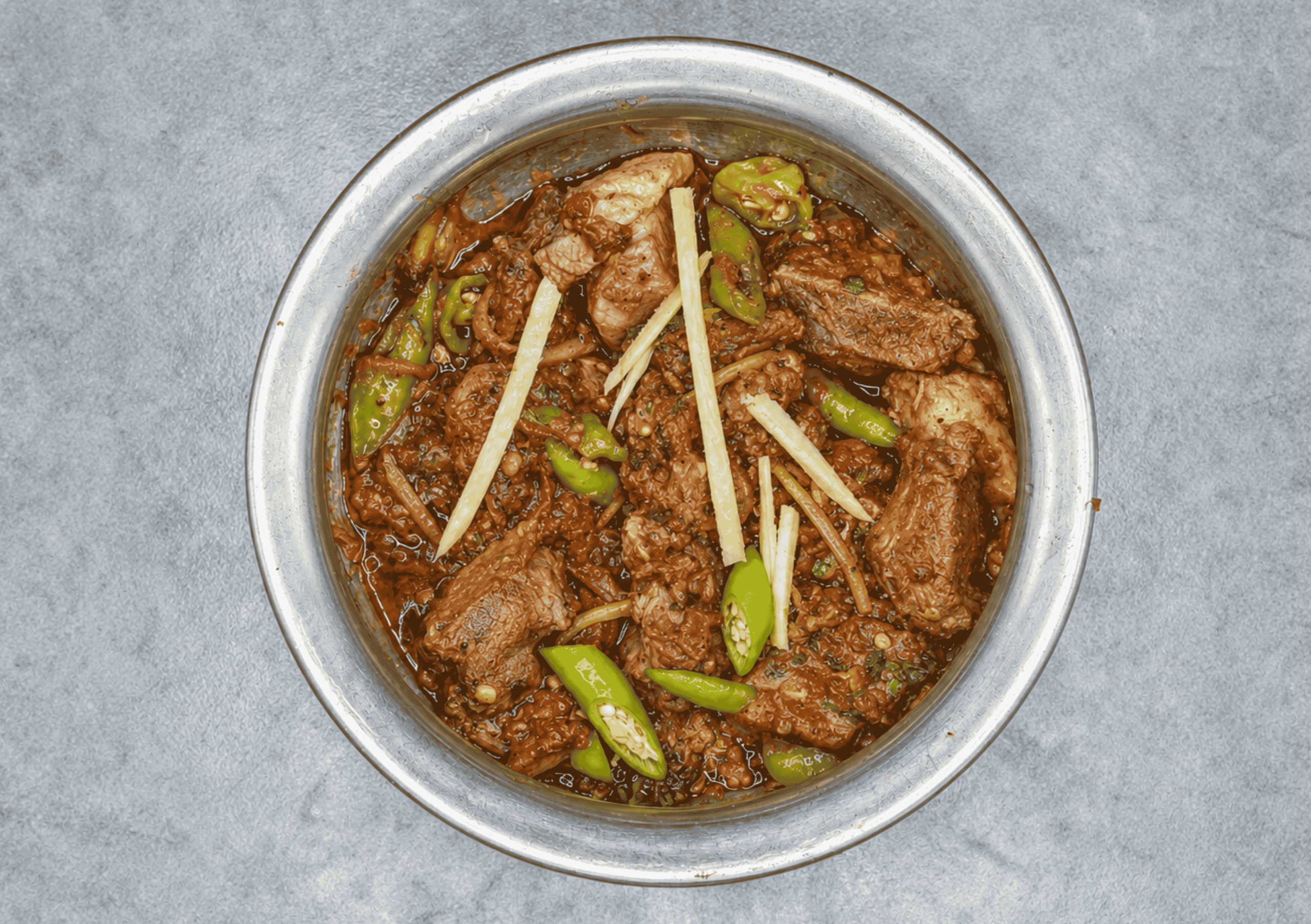
Peshawari karahi is a Pakistani meat curry in which tender lamb, softened tomatoes and fresh green chillies do much of the work. The sauce is cooked down until it coats the meat, with black pepper and strips of ginger adding a sharper finish.
This recipe uses lamb shoulder cut through the bone and a short ingredient list. There is no onion base to prepare or collection of ground spices to measure. The time goes into gently cooking the shoulder, then reducing the tomatoes until their flavour becomes concentrated.
Allow around two and a half hours or a little longer, depending on the lamb. Much of that is gentle simmering, but the final reduction needs attention. Serve the karahi with warm naan or roti to pick up the tomato sauce and meat juices, with optional lemon wedges for squeezing over at the table.
What Is Peshawari Karahi?
Peshawari karahi takes its regional name from Peshawar in northwestern Pakistan. Karahi also describes the deep, rounded cooking pan used to prepare it. The dish belongs to a wider family of Pakistani karahi recipes, with different cooks choosing their own balance of meat, fat, tomatoes and seasoning.
The lightly seasoned style is closely associated with Peshawar’s Namak Mandi food area. Lamb and mutton are important to this cooking, and rendered animal fat can contribute much of the flavour. This home version uses oil or ghee, so its richness comes from a different combination of cooking fat and the lamb itself.
Recipes sold or shared as Peshawari karahi can differ considerably. Some include garlic, yoghurt or extra spices. Here, the seasoning stays with ginger, green chillies and black pepper, allowing the lamb to remain prominent.
Ingredients and Taste
Lamb shoulder has enough connective tissue to benefit from slow cooking. Choose pieces with a useful amount of meat on each bone and a little natural fat. Very lean cubes can become dry, while a pack made mainly of bones will leave the finished portions small.
Ripe tomatoes provide the body of the sauce. At first they release plenty of liquid, but as that evaporates their flesh breaks down around the lamb. The finished flavour should be savoury and gently tangy, with a soft tomato sweetness rather than a raw, sharp taste.
Ginger changes character as it cooks. Crushed ginger softens into the tomatoes, while the fine strips added at the table retain their fresh bite. Green chillies bring heat and a fresh pepper flavour; black pepper adds a warmer, lingering edge.
The sauce will usually be less red than a karahi made with red chilli powder. Its colour depends largely on the tomatoes and how deeply the meat browns. Look for tender lamb and a concentrated coating rather than trying to match a bright restaurant photograph.
Lemon wedges are an optional finishing touch. A squeeze over an individual portion adds freshness and balances the richness of the lamb. Taste the tomato sauce first, then add lemon to your liking so its sharpness does not overwhelm the meat.
A Taste of History
Peshawar’s Namak Mandi is known for meat cooking, including karahi and tikka. Its association with simply seasoned lamb helps explain why Peshawari karahi is often described through the flavour of the meat and fat rather than an elaborate spice mixture.
There is no single recipe behind every use of the name. Published Pakistani home recipes range from short lists of fresh ingredients to versions with yoghurt and several spices. This recipe follows the simpler approach, adapted for a covered simmer on a home hob.
Which Meat Should You Buy?
Ask for lamb shoulder cut through the bone into pieces roughly 4 cm across. A Pakistani or halal butcher can often prepare this cut for karahi. The weight in the recipe includes the bones, so choose fairly meaty pieces for four portions.
Check what a shop means by mutton before buying it. In some Pakistani shops the term is used for goat, while elsewhere it means mature sheep. Either can need considerably longer than lamb. Keep simmering until the meat softens, adding small amounts of water when needed.
How to Make Pakistani Peshawari Karahi
Brown the lamb, simmer it gently, then add the tomatoes once it is nearly tender. Finish with the lid off so excess moisture escapes and the sauce gathers around the meat. See the recipe card at the bottom for exact ingredient quantities and printable cooking instructions.
Ingredients
For the Karahi
- Lamb shoulder, cut through the bone
- Sunflower oil or ghee
- Ripe fresh tomatoes
- Fresh ginger
- Fresh green chillies
- Fine salt
- Coarsely ground black pepper
- Hot water
To Finish and Serve
- Fresh ginger strips, reserved from the ginger above
- Fresh coriander, optional
- Naan or roti
- Plain yoghurt, optional
- Lemon wedges, optional
Equipment
Use a heavy karahi or a deep sauté pan about 28 to 30 cm wide, with a lid. A flat base helps on an electric or induction hob. You will also need tongs, a sturdy spoon and a measuring jug. A thin pan is more likely to scorch during the long simmer.
Cooking Instructions
Step 1: Prepare the Ingredients
Pat the lamb dry. Halve and core the tomatoes, crush the ginger for cooking and reserve some fine strips for serving. Slit the green chillies and keep hot water ready.
Step 2: Brown the Lamb
Heat the oil or ghee in a 28 to 30 cm heavy pan over medium high heat. Brown the lamb in two batches, turning the pieces to colour several sides, allowing about 12 to 15 minutes altogether. Transfer the first batch to a plate while the second cooks. Return all the lamb and any collected juices to the pan.
Step 3: Simmer Gently
Stir in the salt and pour in 250 ml hot water. Scrape up any browned bits, bring to a simmer, then cover and reduce the heat to low. Cook gently for 60 to 90 minutes, turning the pieces every 20 minutes. If the base is drying out, add hot water in 25 to 50 ml additions. Continue until a fork enters a thick piece with only slight resistance; firm meat needs longer.
Step 4: Reduce the Cooking Liquid
Uncover the pan and increase the heat to medium high. Bubble away any deep pool of liquid for about 5 to 10 minutes, leaving moist meat and a shallow layer of concentrated juices. Stir regularly and stop before the base becomes dry or catches.
Step 5: Soften the Tomatoes
Add the tomatoes and crushed ginger, turning the tomato halves cut side down where possible. Cover and cook over medium low heat for 10 to 12 minutes, until the tomatoes collapse. Lift off any loose skins with tongs if you prefer a smoother sauce, then crush the flesh gently with the spoon.
Step 6: Cook Down the Sauce
Cook uncovered over medium high heat for about 10 to 20 minutes, turning the meat and scraping the base frequently. The tomato should become a thick coating with a light sheen of fat, and a spoon drawn across the base should briefly leave a clear path. If the lamb starts breaking apart while the sauce is still loose, lift it out, reduce the sauce separately, then return it.
Step 7: Finish with Chillies and Pepper
Add the slit green chillies and coarsely ground black pepper. Cook for 3 to 5 minutes, stirring gently, until the chillies soften slightly and the lamb is tender. Taste and adjust the salt. If the sauce catches before the chillies soften, lower the heat and add a tablespoon of hot water.
Step 8: Rest and Serve
Turn off the heat and leave the karahi for 5 minutes. Scatter over the reserved ginger strips and the optional chopped coriander. Serve hot with naan or roti, plain yoghurt and optional lemon wedges for squeezing over to taste.
Variations and Substitutions
Goat or Mature Mutton
Use the same weight of meaty pieces cut through the bone. The flavour and cooking time will change. Follow the tenderness check rather than the lamb timing, and add the tomatoes only when the meat has nearly softened.
Ghee Instead of Oil
Ghee adds a buttery aroma; sunflower oil gives a more neutral base. Neither reproduces the particular flavour of sheep fat used in some restaurant preparations, but both suit this home method.
Tinned Tomatoes
If fresh tomatoes are hard and pale, use the same weight of drained whole tinned plum tomatoes. Crush them before adding and omit the skin removal. Their texture and acidity differ, so judge the finish by the thickness of the sauce.
A Milder Karahi
Use fewer green chillies or choose a milder variety. Black pepper also contributes heat, so reduce it if necessary. There is no need to add red chilli powder for colour.
Cooking Tips for Peshawari Karahi
- Brown the lamb in batches. Crowding the pan traps moisture and makes it harder to colour the surface.
- Keep the simmer gentle. Strong heat can dry the base before the shoulder becomes tender.
- Check the liquid during simmering, even with the lid on. Pan width and lid fit affect how quickly water escapes.
- Give firm meat more time under the lid. Adding extra tomatoes will not solve an unfinished tenderising stage.
- Uncover the pan for the final reduction. If the sauce remains watery, keep cooking and stirring rather than adding a thickener.
- Reduce the heat as the sauce thickens. A little browning on the base adds flavour, but blackened ginger or tomatoes will taste bitter.
- Lift fragile pieces of lamb out while reducing a loose sauce, then return them to heat through.
How to Store and Reheat
Storing in the Fridge
Divide leftovers into shallow containers, cool promptly and refrigerate within two hours of cooking. Keep the fridge at 5°C or below and eat the karahi within 48 hours.
Freezing and Defrosting
Freeze cooled portions promptly in sealed containers. Use within three months for good quality. Defrost fully in the fridge and use within 24 hours of thawing.
Reheating on the Hob
Warm the karahi in a covered pan over gentle to medium heat, adding a small splash of water if needed. Turn the pieces occasionally until the meat and sauce are steaming hot throughout. Reheat only once.
Reheating in the Microwave
Use a covered, vented microwave safe dish. Heat in intervals, stirring the sauce and turning the meat between them. Check the centre of the larger pieces, then follow the microwave’s standing time before serving.
Notes
Meat: The listed weight includes bones. Choose meaty shoulder pieces rather than a pack dominated by bones. Goat or mature mutton can replace lamb, but may take substantially longer to soften.
Tomatoes: Drained whole tinned plum tomatoes can replace fresh tomatoes by weight. Crush before adding and skip the skin removal.
Heat: Reduce the green chillies and black pepper for a milder result. No onion, garlic, yoghurt or powdered spice blend is needed for this particular version.
Consistency: The finished sauce should coat the meat. If the lamb is tender before the sauce reduces, remove it temporarily and reduce the sauce on its own.
Storage: Cool promptly in shallow containers and refrigerate within two hours. Eat within 48 hours or freeze promptly. For good quality, use frozen portions within three months. Thaw in the fridge and use within 24 hours. Reheat once until steaming hot throughout.
Lemon: Serve the wedges alongside for squeezing over individual portions to taste. Lemon is an optional accompaniment and does not need to be cooked into the sauce.
Accompaniments: Bread, yoghurt and lemon wedges are optional and are separate from the four curry portions.
Keywords: Peshawari karahi, Pakistani lamb karahi, Peshawari lamb curry, karahi gosht, rustic meat curry, tomato lamb curry, Khyber Pakhtunkhwa food, lamb shoulder recipe
Pakistani Peshawari Karahi (Rustic Meat Curry)
Ingredients
For the Karahi
- 1 kg lamb shoulder weight including bones, cut through the bone into pieces roughly 4 cm across
- 60 ml sunflower oil or 50 g ghee
- 500 g ripe tomatoes halved and firm cores removed
- 30 g fresh ginger peeled, with 20 g crushed and 10 g cut into fine strips
- 4 fresh green chillies about 20 g, slit lengthways, or fewer to taste
- 1 teaspoon fine salt about 6 g, plus more to taste
- 1 teaspoon coarsely ground black pepper
- 250 ml hot water plus extra in 25 to 50 ml additions if needed
Optional Garnish
- 5 g fresh coriander roughly chopped
Optional Accompaniments
- 4 naan or roti
- 200 g plain yoghurt
- 1 lemon cut into wedges
Instructions
- Pat the lamb dry with kitchen paper. Halve the tomatoes and remove their firm cores. Crush 20 g of the ginger and cut the remaining 10 g into fine strips for serving. Slit the green chillies lengthways. Keep the hot water ready.
- Heat the oil or ghee in a 28 to 30 cm heavy pan over medium high heat. Brown the lamb in two batches, turning the pieces to colour several sides, allowing about 12 to 15 minutes altogether. Transfer the first batch to a plate while the second cooks. Return all the lamb and any collected juices to the pan.
- Stir in the salt and pour in 250 ml hot water. Scrape up any browned bits, bring to a simmer, then cover and reduce the heat to low. Cook gently for 60 to 90 minutes, turning the pieces every 20 minutes. If the base is drying out, add hot water in 25 to 50 ml additions. Continue until a fork enters a thick piece with only slight resistance; firm meat needs longer.
- Uncover the pan and increase the heat to medium high. Bubble away any deep pool of liquid for about 5 to 10 minutes, leaving moist meat and a shallow layer of concentrated juices. Stir regularly and stop before the base becomes dry or catches.
- Add the tomatoes and crushed ginger, turning the tomato halves cut side down where possible. Cover and cook over medium low heat for 10 to 12 minutes, until the tomatoes collapse. Lift off any loose skins with tongs if you prefer a smoother sauce, then crush the flesh gently with the spoon.
- Cook uncovered over medium high heat for about 10 to 20 minutes, turning the meat and scraping the base frequently. The tomato should become a thick coating with a light sheen of fat, and a spoon drawn across the base should briefly leave a clear path. If the lamb starts breaking apart while the sauce is still loose, lift it out, reduce the sauce separately, then return it.
- Add the slit green chillies and coarsely ground black pepper. Cook for 3 to 5 minutes, stirring gently, until the chillies soften slightly and the lamb is tender. Taste and adjust the salt. If the sauce catches before the chillies soften, lower the heat and add a tablespoon of hot water.
- Turn off the heat and leave the karahi for 5 minutes. Scatter over the reserved ginger strips and the optional chopped coriander. Serve hot with naan or roti, plain yoghurt and optional lemon wedges for squeezing over to taste.


Leave a Review