


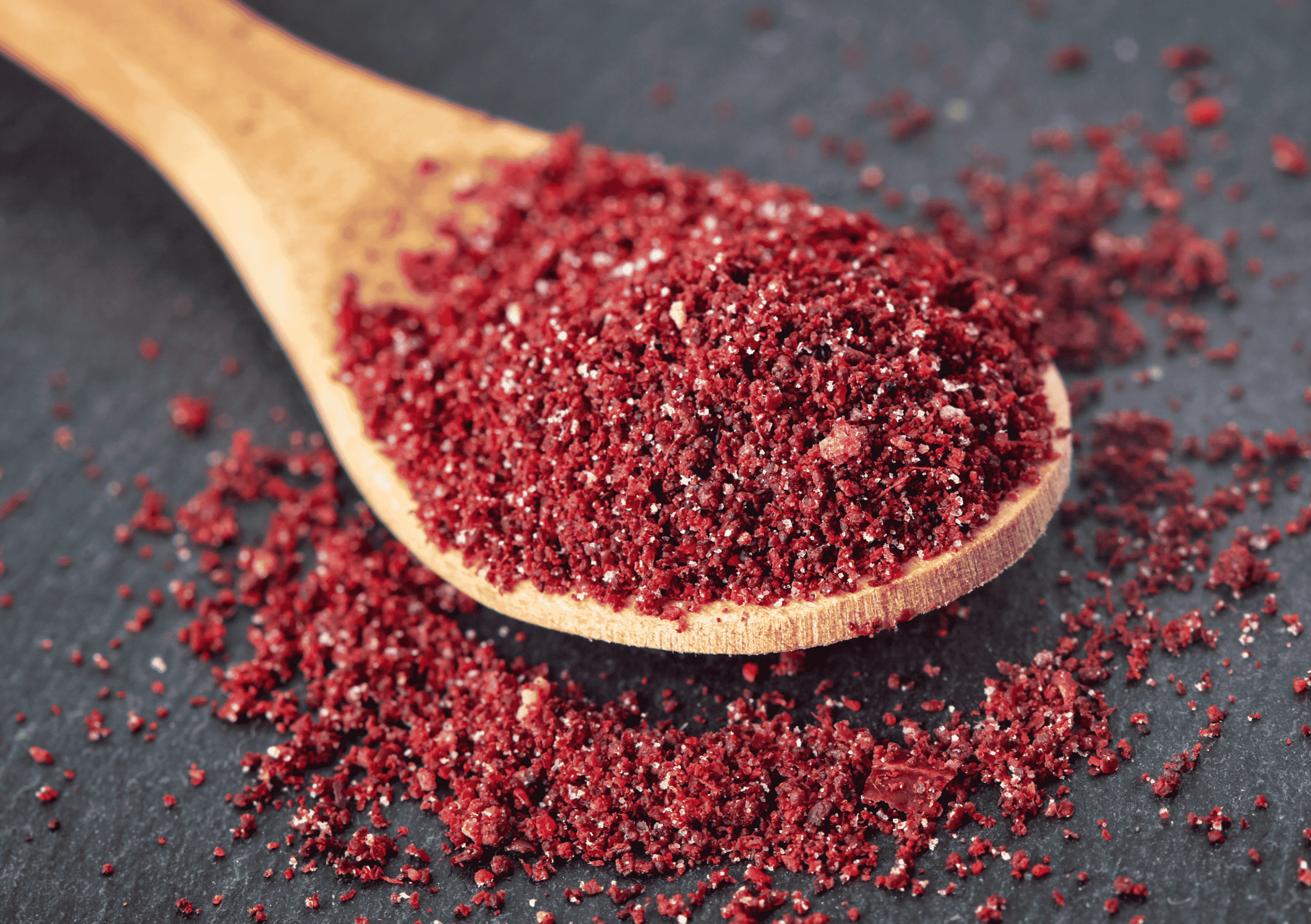
Sumac is a deep red spice with a tart, fruity flavour. A little over sliced onions, grilled meat or a spoonful of yoghurt gives the food a sour lift without adding lemon juice or vinegar. Its colour can look fiery, but the flavour is sharp rather than hot.
It is used across several Middle Eastern cuisines, from Palestinian chicken dishes to Lebanese salads and Iranian rice served with kebabs. You can stir it into a dressing, cook it with onions or scatter it over a finished plate. Knowing which job it is doing makes the small jar much easier to use.
What Is Sumac?
The culinary sumac commonly sold for Middle Eastern cooking comes from the dried fruits of Rhus coriaria, a shrub or small tree. The fruits, often called berries, are processed into a red seasoning with a slightly coarse texture. The ground spice is the form you will usually find in a food shop.
It can range from reddish brown to a deeper burgundy. Some products contain only sumac, while others include salt, so it is worth reading the ingredients before seasoning a dish. A recipe that calls for sumac and salt separately may need adjusting if your jar already contains both.
You may also see whole dried sumac fruits for sale. If a recipe asks for ground sumac, the prepared spice is the straightforward choice. Whole fruits need processing, including dealing with the hard seeds, rather than simply being scattered over the food.
What Does Sumac Taste Like?
Sumac tastes sour, with a fruity edge and a slight drying sensation on the tongue. Lemon is a useful comparison for its tartness, although sumac has a different aroma and a more earthy finish. It gives a dish acidity without adding a spoonful of liquid.
That is useful on foods where texture matters. You can add it to a thick yoghurt dip without thinning it, or sprinkle it over cooked vegetables while keeping their surfaces fairly dry. Its flavour also works alongside lemon juice, as it does in some fattoush dressings.
If you are trying it for the first time, taste a small pinch on a slice of cucumber or a little plain yoghurt. This gives you a clearer sense of the spice than adding it immediately to a heavily seasoned dish. Check how salty it tastes as well as how sour.
A Taste of History
Sumac grows naturally across parts of the Mediterranean and western Asia. Its culinary use reflects that broad geography, with different traditions making room for its sourness. It is as much a seasoning to put on the table as an ingredient to add during cooking.
Its place in those kitchens is easiest to understand through the dishes. Palestinian musakhan uses it generously with onions and chicken, Lebanese fattoush puts it among crisp vegetables and bread, and Iranian cooks serve it with rice and kebabs. These are distinct uses of the same tart seasoning.
Traditional Ways to Use Sumac
Palestinian Musakhan
Musakhan brings together chicken, onions, olive oil, sumac and bread. The onions carry a generous amount of the spice, and the bread takes up their flavour and the cooking juices. Here sumac helps shape the dish, rather than appearing only as a light garnish.
The combination also shows why sumac works well with rich ingredients. Its sourness balances the olive oil and chicken while the onions supply sweetness. A small sprinkle at the end can add another noticeable layer of tartness.
Lebanese Fattoush
Fattoush combines vegetables, herbs and pieces of crisp flatbread. Sumac is used in the dressing and can be sprinkled over the finished salad. Its tart flavour suits ingredients such as tomatoes, cucumber and radishes, while the bread adds a different kind of crunch.
It is worth keeping the spice even if your dressing already contains lemon. The two contribute different flavours, and the sumac also leaves its red flecks through the salad. Add the crisp bread close to serving so it keeps some of its texture.
Turkish Sumac Onions
Thinly sliced onions dressed with sumac are a familiar accompaniment to grilled foods. Rubbing the slices with a little salt and sumac softens them and helps spread the seasoning. Parsley, tomatoes, olive oil or lemon may join them, depending on the preparation.
You can also find sumac among the seasonings used in versions of Turkish Acılı Ezme, a chopped tomato and pepper salad. In that setting, it adds tartness alongside the heat of the chillies.
Iranian Rice and Kebabs
Sumac is served with Iranian kebabs and rice, where it can be sprinkled over the plate to taste. The sourness works particularly well with buttery rice and grilled meat. Our Chelo Kabab recipe introduces this combination.
This is a useful way to get to know it at home. Serve a small amount separately and add it to a few bites of the meal first. You can judge the balance without covering the whole plate before you have tasted it.
Is Sumac the Same as Za’atar?
Sumac is an ingredient; the za’atar sold as a seasoning is a blend. That blend commonly combines dried herbs, sesame seeds, sumac and salt. The name za’atar can also refer to the herb itself, which is why recipes and labels sometimes need a closer look.
Ground sumac gives you a fairly direct sour flavour. A za’atar blend adds the flavour of the herbs and sesame as well. It may be delicious on the same foods, but it changes the seasoning, so check which one the recipe asks for before reaching for the jar.
How to Use Sumac in Everyday Cooking
As a Finishing Seasoning
Scatter a little over hummus, yoghurt, eggs or roasted vegetables just before serving. Start with a light dusting and taste. This is a simple way to add the spice without changing the cooking method, and it lets you control how much sourness each portion gets.
It also works on fresh tomatoes and sliced cucumber with olive oil. Taste the salad before adding extra salt, especially if the sumac is salted. The spice should make the vegetables more interesting without hiding their flavour.
In Dressings and Marinades
Stir sumac into olive oil with the other ingredients in a dressing, or add it to a marinade for chicken or vegetables. Mix it through well so the tartness is distributed rather than collecting in dry patches. You can still use lemon juice if the recipe needs both its flavour and liquid.
During Cooking
Sumac can be cooked as part of a dish as well as used at the end. Musakhan’s seasoned onions are a good example. Follow the recipe’s timing rather than assuming that every use needs a final sprinkle, and avoid leaving the dry spice to scorch in an empty, hot pan.
What Can You Use Instead of Sumac?
If a dish mainly needs a little sourness, lemon juice is a practical alternative. Add it gradually and taste, remembering that it brings liquid as well as flavour. It works more easily in a dressing than on something you are trying to keep crisp.
Finely grated lemon zest can add a citrus aroma where you want to avoid extra liquid, but it will not supply the same tartness by itself. Neither option reproduces sumac’s colour or its full flavour. For a dish such as musakhan, where sumac is central, it is worth finding the spice.
How to Buy Sumac
Look in Middle Eastern food shops, spice shops or the spice section of a well stocked supermarket. Ground sumac is ready to use. Choose a quantity you will use regularly rather than a large bag that will sit open for a long time.
Read the label for added salt and any other ingredients. An unsalted product gives you separate control of sourness and salt; a salted one can still be useful, but you need to account for it. Colour alone does not tell you how the spice will taste.
Buy a product clearly sold for cooking. Culinary sumac from Rhus coriaria is different from poison sumac, Toxicodendron vernix. The shared common name is not a guide to identifying a wild plant, so use a food supplier rather than treating unknown berries as a substitute.
How to Store Sumac
Keep sumac tightly sealed in a cool, dark cupboard, away from the cooker and direct sunlight. Use a clean, dry spoon and close the container after each use. Heat, air and moisture make a poor home for a spice you want to keep flavourful.
Follow the pack’s storage instructions and best before date. Ground spices gradually lose their flavour, so taste a small amount in food if an older jar seems weak. If you transfer it to another container, keep the ingredient details and date so you still know whether it contains salt.


