


Brief Overview
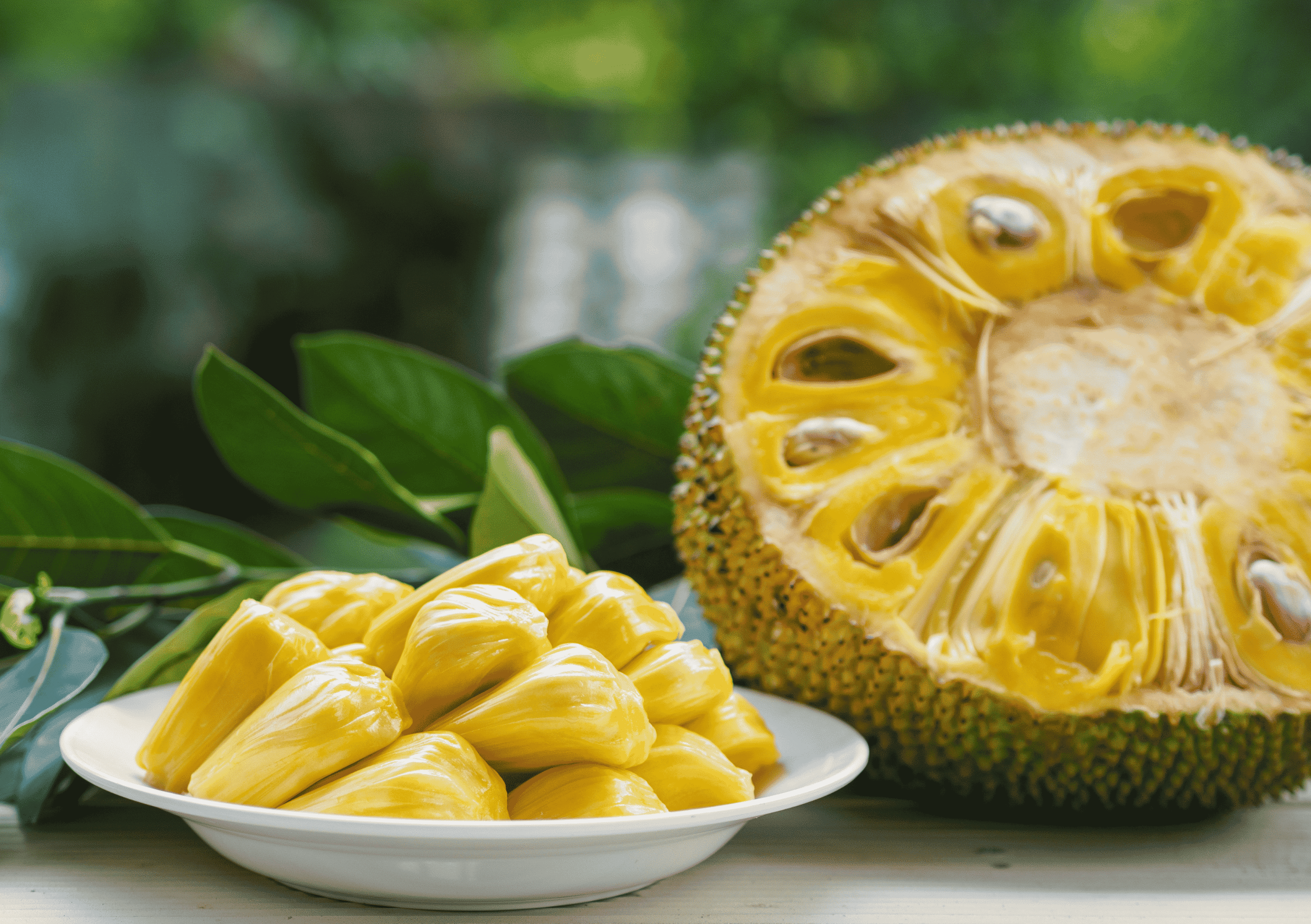
Cut into a ripe jackfruit and you will find yellow pods tucked between pale strands, each wrapped around a smooth seed. The flesh is sweet and fragrant, with a texture that can be firm and chewy or soft and juicy. Pick the same fruit young and it becomes a very different ingredient, ready for a pot of curry or a tangy vegetable soup.
That difference matters when you shop. Sweet ripe jackfruit belongs in a fruit bowl or dessert, while young green jackfruit is the one to choose for savoury cooking. Both have a place in the kitchens of South and Southeast Asia, where cooks use the fruit at different stages of maturity.
What Is Jackfruit?
Jackfruit is the fruit of Artocarpus heterophyllus, a tropical tree in the mulberry family. The large, oval fruit grows from the trunk and substantial branches. Its thick skin is covered with blunt points, and inside are fleshy pods, seeds and a fibrous middle.
You may see it called nangka in Indonesia or chakka in Kerala. In Sri Lanka, polos refers to the young fruit used in cooking. These names are useful on menus and packaging, where the English word jackfruit alone may not tell you whether you are buying something sweet or savoury.
Whole fruits can be awkward to carry and prepare. Cut wedges and trays of cleaned ripe pods are an easier way to try fresh jackfruit. For a savoury dish, canned young jackfruit saves the work of cutting through the skin and dealing with the sticky sap.
What Does Jackfruit Taste Like?
Ripe Jackfruit
Ripe jackfruit has a pronounced sweetness and a strong fruity fragrance. Banana and pineapple are useful starting points for describing it, although the combination does not quite reproduce its flavour. Some varieties have firm pods that give a chewy bite; others are much softer.
The aroma becomes noticeable as the fruit ripens. If you are trying it for the first time, buy a small tray of prepared pods rather than a whole fruit. Eat a piece on its own before adding it to a dessert, so you can judge how much sweetness and fragrance you want.
Young Green Jackfruit
Young jackfruit is pale inside, with a mild flavour and firm flesh that softens during cooking. It takes on the seasoning around it and can stay in chunks or pull apart into strands. That texture works in curries and stews as well as newer preparations such as barbecue sandwiches.
It will not make a dish taste like meat by itself. The sauce, spices and cooking method provide much of the finished flavour. Young jackfruit is also low in protein compared with meat, so a meal using it can include beans, lentils or tofu if you want another source of protein.
Ripe or Young: Which Should You Buy?
For eating fresh, look for ripe pods or a ripe cut section. For curry, soup or a shredded filling, look for a label that says young, green or unripe. With canned fruit, check what it is packed in as well as the name on the front.
Young jackfruit in water or brine suits savoury cooking. Jackfruit in syrup is sold for sweet uses and will change the taste of a curry. Packaged fruit already coated in a sauce is another product again, so check its seasoning before using it in a different recipe.
A Taste of History
Kew records southwestern India as jackfruit’s native range. Its cultivation spread across tropical Asia, and the fruit is now grown in many tropical regions beyond Asia. The places where it grows today are therefore much broader than its native range.
Its use as a savoury ingredient long predates its appearance in Western meat substitutes. Cooks in Sri Lanka simmer young fruit in curry, while in Java it becomes gudeg or joins other vegetables in soup. In Kerala, the fruit and its seeds are used in separate dishes, giving one harvest several uses in the kitchen.
Traditional Ways to Eat Jackfruit
Gudeg in Indonesia
Gudeg is closely associated with Yogyakarta in Java. Young jackfruit cooks slowly with coconut milk, palm sugar and aromatics until it becomes tender and sweetly savoury. It is served with rice and a selection of accompaniments that can include eggs, chicken, tofu or tempeh.
The sweetness comes from the preparation, rather than from using ripe dessert fruit. It is a useful example of why young jackfruit does not need to be treated only as a substitute for something else: it is the central ingredient in an established dish.
Sayur Asem in Indonesia
Young jackfruit also works in sayur asem, a vegetable soup with a sour tamarind broth. The firmer chunks sit alongside ingredients such as sweetcorn, long beans and chayote. You can see this combination in our Indonesian Sayur Asem recipe.
Polos Curry in Sri Lanka
Polos curry uses young jackfruit with spices and coconut milk. In the preparation documented by the International Fund for Agricultural Development, goraka adds sourness and the curry simmers until the pieces are tender and the sauce thickens. The fruit remains in pieces rather than being pulled into fine strands.
Jackfruit Dishes in Kerala
Kerala’s jackfruit dishes include tender fruit cooked in avial and chakkakuru thoran made with the seeds. Ripe fruit is also used in sweet preparations such as chakkayappam. These uses show how much the choice of ripeness and part of the fruit can change the finished food.
How to Choose Fresh Jackfruit
A ripe whole jackfruit usually develops a noticeable sweet aroma, and its skin may give slightly under gentle pressure. The points on the rind can flatten and spread apart as it matures. Colour varies between varieties, so a yellow skin alone is not a reliable guide.
If you are buying a wedge, tell the seller whether you want it for eating fresh or for cooking. Prepared ripe pods should look plump rather than dried out. In a shop outside a growing region, frozen fruit or a can may be easier to find than a whole fresh one.
How to Prepare Jackfruit
Opening a Whole Ripe Fruit
Wash the outside before cutting. Use a large, stable chopping board and protect the work surface from the sticky latex sap. Lightly oil the knife blade and your hands, keeping the handle dry so you can hold it securely. Coconut oil is useful for keeping the latex from clinging to the blade.
Cut the fruit into manageable sections and work around the tough core. Pull the yellow pods away from the surrounding strands, then split each pod to remove its seed. Set the cleaned flesh aside and keep any seeds you want to cook separately.
The ripe flesh is ready to eat without cooking. The rind and tough central core are not the parts to serve with the pods. If a whole fruit is too large to handle securely, buying a cut section or cleaned pods is the simpler option.
Preparing Young Jackfruit
For canned young jackfruit, drain it and rinse away the packing liquid. Check the pieces for any particularly hard core or firm seeds, trimming those away if necessary. For soup or curry, leave the pieces in chunks and cook according to the recipe.
If you want strands, cook the fruit until tender enough to separate with a fork, then pull it apart. Fresh young jackfruit needs its own preparation and can take longer than canned fruit, so use a recipe written for the form you have. Tenderness is a better guide than assuming the two need identical cooking times.
Cooking the Seeds
Jackfruit seeds are edible after cooking. Boil them in water for about 20 minutes, or until tender, then cool enough to handle and remove the tough outer covering. The cooked centres have a starchy texture often compared with chestnuts. Eat them cooked rather than raw.
How to Store Jackfruit
Fresh and Canned Fruit
Once the fruit is cut and cleaned, put the pods in a clean, covered container in the fridge and use them promptly. Follow the storage instructions on prepared packs. After opening canned jackfruit, transfer any unused fruit to a suitable covered container, refrigerate and follow the label’s use period.
Freezing
Cleaned ripe pods can be frozen in small portions. Remove the seeds first and pack the flesh in a freezer container or bag. Thaw in the fridge. The texture may be softer afterwards, which makes the thawed fruit useful for blending or cooking into desserts.
Cooked Dishes
For cooked jackfruit dishes, cool and refrigerate leftovers within two hours. Eat them within 48 hours or freeze them. Reheat only once, until steaming hot throughout. If the dish is served with rice, store the rice according to its shorter storage guidance.
