



- View
Chicken Karahi is one of Pakistan’s best known meat dishes, built around chicken, ripe tomatoes, ginger, garlic and fresh chillies. Rather than sitting in a loose curry sauce, the ingredients are cooked down until the tomatoes cling to the meat in a glossy, concentrated masala.
It is the sort of dish that arrives at the table still looking lively. Fresh ginger gives it a sharp fragrance, coriander brings a clean herbal note, and green chillies provide adjustable heat. Hot naan or roti is particularly good for picking up the thick tomato masala left in the karahi.
Part of its appeal lies in how direct the cooking feels. There is no need for an extensive collection of ingredients to create depth. Good chicken, properly ripened tomatoes and enough time over the heat do much of the work, while carefully chosen spices strengthen rather than hide those flavours.
Chicken Karahi is commonly prepared for family meals, restaurant dinners and gatherings where dishes are placed in the centre for everyone to share. Its bold aroma and richly coated pieces of chicken make it especially satisfying when eaten freshly cooked, straight from the pan with warm bread.
What Is Chicken Karahi?
Chicken Karahi is a Pakistani chicken dish traditionally prepared in a karahi, a deep, round cooking vessel with sloping sides that resembles a wok. The pan gives the dish its name and suits its energetic cooking method, where ingredients are fried and reduced over fairly high heat.
A classic version uses bone in chicken because the bones and surrounding tissue contribute flavour as the meat cooks. Tomatoes form the body of the masala, while ginger, garlic and green chillies provide much of its recognisable aroma. Coriander and thin strips of ginger often finish the dish.
Unlike many curries with plenty of liquid, karahi is usually reduced until relatively little free sauce remains. The tomatoes soften, release their juices and gradually cook down around the chicken. As moisture evaporates, the masala becomes richer and the cooking fat begins to appear around its edges.
This reduction is an important part of the dish rather than simply a way to thicken the sauce. Frying and stirring encourage the tomato mixture to become concentrated and glossy, creating a masala that coats each piece of chicken instead of pooling around it like a soupier salan.
Recipes differ between households, restaurants and regions. Some versions include onion, yoghurt or garam masala, while others keep the formula considerably simpler. Onion is not essential to a traditional tomato focused karahi, and several Pakistani preparations deliberately leave it out.
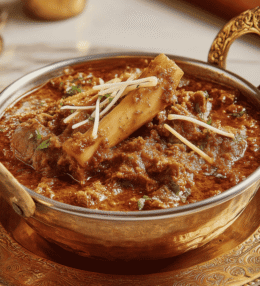
The finished dish is usually brought to the table in its cooking vessel or a similar serving pan. That presentation suits karahi particularly well because it is intended to be eaten hot, while the masala is still glossy and the fresh ginger, coriander and chillies retain their fragrance.
Ingredients and Taste
Chicken and tomatoes are the central ingredients. Ginger and garlic are usually added generously, followed by seasonings such as salt, crushed black pepper, red chilli, cumin or coriander. Green chillies, fresh coriander and julienned ginger are common finishing ingredients, with oil or ghee used for frying.
The tomatoes matter more here than they do in many curries. Ripe tomatoes break down into a thick sauce with natural sweetness and acidity, coating each piece of chicken rather than creating a separate broth. Cooking them thoroughly softens their raw sharpness and strengthens their savoury flavour.
A well cooked Chicken Karahi tastes rich, tangy, savoury and fresh at the same time. Tomato provides acidity, chicken gives the dish its meaty depth, and ginger contributes a warm bite. Green chilli adds a cleaner heat, while crushed black pepper can leave a deeper warmth afterwards.
The texture is equally important. The chicken should remain juicy while the masala becomes thick enough to hold onto it. Fresh ginger and coriander added near the end stop the cooked flavours from feeling heavy, giving each mouthful a brighter finish and a fragrance noticeable before the first bite.
Chicken Karahi can certainly be fiery, but intense heat is not essential. The quantity and type of chilli can be changed without losing the identity of the dish. What matters more is the balance between chicken, tomato, ginger and the properly reduced masala rather than simply adding excessive chilli.
Some restaurant preparations introduce yoghurt for extra richness or use a wider range of ground spices. Others stay close to tomatoes, ginger, garlic, chillies and black pepper. These differences explain why two plates of Chicken Karahi can look similar while tasting noticeably different.
It is commonly eaten with naan or roti, which work particularly well because the masala is thick enough to scoop up. Rice can also be served alongside it, although bread complements the traditional eating style particularly well and makes it easy to enjoy every bit of sauce from the pan.
A Taste of History
The precise birthplace of karahi is difficult to establish with certainty. The dish is firmly associated with Pakistan, particularly the north western food traditions connected with Khyber Pakhtunkhwa. Pakistani food writing has also linked forms of karahi gosht with Landi Kotal and Pashtun cooking.
Earlier meat dishes from this region could be considerably simpler than the tomato rich karahi familiar today. One account published by Dawn connects karahi gosht with namkeen gosht, where meat was cooked simply with fat, salt, pepper and, in later preparations, green chillies.
Tomatoes and chilli peppers were introduced to South Asia after arriving from the Americas, so the familiar tomato-based form of karahi developed after those ingredients became established in regional cooking. Their adoption transformed the dish, giving later karahis their acidity, colour and distinctive fresh heat.
As karahi cooking spread through Pakistan, different cities and regions developed their own preferences. Some preparations remained deliberately simple, allowing the flavour of fresh meat to dominate, while others used more tomatoes, spices, yoghurt and aromatics to build a richer restaurant style masala.
Lahore became particularly closely associated with karahi through its restaurant and food street culture. Pakistani accounts describe chicken karahi prepared there by cooking chicken with tomatoes, green chillies, ginger and garlic in the broad metal vessel that gives the dish its name.
Chicken itself became a widely recognised karahi choice alongside older goat and lamb versions. Its shorter cooking time makes it well suited to the fast, high heat method, allowing the chicken to cook while the tomatoes reduce into a thick sauce without requiring the longer tenderising needed for tougher meats.
Today there is no single recipe followed across Pakistan. Peshawari influenced versions can be restrained in their seasoning, while restaurant interpretations elsewhere may include yoghurt, onion or stronger spice blends. The connecting idea is meat cooked with a concentrated masala in a karahi.
Chicken Karahi has also travelled widely with Pakistani communities and restaurants abroad, including throughout the United Kingdom. Despite regional adaptations, its recognisable character still depends on fresh tomato, ginger, chilli and a cooking method that reduces the sauce until it hugs the chicken.
How to Make Chicken Karahi
Traditional Pakistani Chicken Karahi is a robust tomato-based chicken dish cooked quickly over fairly high heat in a karahi, a deep, rounded cooking pan. Unlike many Pakistani curries, a traditional karahi does not rely on onions or a heavy gravy. Its character comes from chicken, ripe tomatoes, ginger, garlic, green chillies and freshly crushed spices cooked until the tomatoes reduce and the oil separates. See the recipe card at the bottom for printable directions
Ingredients
For the Chicken Karahi
• 1 kg bone in chicken, skin removed and cut into small curry pieces
• 80 ml vegetable oil or ghee
• 1 tbsp fresh garlic, finely crushed
• 1 tbsp fresh ginger, finely crushed
• 600 g ripe tomatoes, roughly chopped
• 1½ tsp salt, or to taste
• 1 tsp freshly crushed black pepper
• 1½ tsp crushed coriander seeds
• 1 tsp crushed cumin seeds
• ½ tsp red chilli powder
• 4 green chillies, slit lengthways
• 1 tsp dried fenugreek leaves, lightly crushed, optional
• 1 tsp garam masala
For the Garnish
• 25 g fresh ginger, cut into fine matchsticks
• 2 tbsp fresh coriander, roughly chopped
• 1 green chilli, finely sliced
• ½ lemon, cut into wedges
Cooking Instructions
Step 1: Prepare the Chicken
Pat the chicken pieces dry with kitchen paper, so they fry rather than steam. Heat the oil or ghee in a large karahi over medium high heat. Add the chicken and cook for 6 to 8 minutes, turning regularly, until the outside loses its raw colour and develops light golden patches. Keep the heat lively before adding the aromatics.
Step 2: Fry the Ginger and Garlic
Add the crushed ginger and garlic to the chicken. Stir continuously for about 1 minute until fragrant, taking care not to let the garlic darken. Frying the aromatics directly with the chicken builds flavour without needing an onion base. Once fragrant, move straight on to the tomatoes.
Step 3: Add the Tomatoes
Add the chopped tomatoes and salt. Stir thoroughly, scraping the bottom of the karahi to loosen any browned pieces. Cover and cook over medium heat for 8 to 10 minutes until the tomatoes soften considerably. Once tender, uncover the karahi ready for reducing.
Step 4: Break Down the Tomatoes
Use the back of a wooden spoon to crush the softened tomatoes into the chicken. Increase the heat to medium high and cook uncovered for 8 to 10 minutes, stirring frequently. The tomatoes should lose their raw taste and reduce into a thick coating rather than a watery curry sauce. Continue until excess moisture has evaporated.
Step 5: Add the Crushed Spices
Add the black pepper, crushed coriander seeds, crushed cumin seeds and red chilli powder. Stir well so the spices are distributed through the tomato mixture. Freshly crushing the coriander and cumin gives the karahi a coarser texture and stronger aroma than finely ground spices. Cook for another 2 minutes before continuing.
Step 6: Bhuno the Karahi
Continue frying over medium high heat for 5 to 8 minutes, stirring and turning the chicken frequently. This stage, known as bhunai, concentrates the tomato mixture and encourages the oil to separate around the edges of the karahi. Avoid adding water unless the mixture begins catching before the chicken is cooked.
Step 7: Cook the Chicken Through
Reduce the heat to medium and cook for another 5 to 8 minutes, or until the chicken is completely cooked and tender. If necessary, add only a small splash of hot water and allow it to evaporate afterwards. The finished karahi should remain thick, glossy and relatively dry rather than resembling a conventional curry gravy.
Step 8: Add the Green Chillies
Add the slit green chillies and dried fenugreek leaves, if using. Toss everything together and cook uncovered for 2 to 3 minutes. Adding the green chillies towards the end preserves their fresh aroma while still allowing their flavour to perfume the chicken. Finish with the garam masala.
Step 9: Finish with Ginger
Scatter most of the ginger matchsticks and fresh coriander into the karahi. Toss gently and cook for another minute, then remove from the heat. Taste and adjust the salt if required. Allow the karahi to rest for about 5 minutes before serving so the final aromatics settle into the sauce.
Step 10: Garnish and Serve
Serve the Chicken Karahi hot, preferably directly from the karahi. Finish with the remaining ginger, coriander and sliced green chilli. Serve with hot naan, roti or chapati, with lemon wedges alongside for anyone who wants a sharper finish.
Variations and Substitutions
Boneless chicken: Bone in chicken is traditional and gives the dish more flavour, but boneless chicken thigh can be used. Reduce the cooking time slightly to prevent it becoming dry.
Fresh tomatoes: Ripe fresh tomatoes provide the characteristic flavour and texture. If good fresh tomatoes are unavailable, use good quality whole peeled tinned tomatoes, draining some of their liquid before crushing them.
Ghee: Vegetable oil is widely used for karahi, while ghee provides a richer flavour. Either works well, or use a mixture of the two.
Green chillies: Pakistani green chillies vary considerably in heat. Serrano chillies make a useful substitute, while milder green chillies can be used for less heat.
Dried fenugreek leaves: Also known as kasuri methi, these are optional in Chicken Karahi. If unavailable, simply leave them out rather than substituting fresh fenugreek, which has a different character.
Fresh coriander: If unavailable, it can be omitted. Dried coriander leaves are not a good replacement for the fresh garnish.
Karahi pan: If you do not own a traditional karahi, use a wide wok, sauté pan or heavy frying pan. A broad cooking surface is important because it allows moisture from the tomatoes to evaporate quickly.
Cooking Tips for Perfect Chicken Karahi
• Choose bone in chicken cut into relatively small pieces. The bones contribute flavour while the smaller pieces cook quickly enough for the high heat karahi method.
• Use ripe, flavourful tomatoes. They form the body of the dish, so pale or underripe tomatoes can leave the finished karahi noticeably flat.
• Do not add onions simply to create more sauce. The concentrated combination of tomatoes, chicken juices and spices is central to this style of Pakistani Chicken Karahi.
• Crush the coriander and cumin seeds rather than grinding them into a fine powder. Their slightly coarse texture is characteristic of a good karahi.
• Give the tomatoes enough time to reduce. A finished karahi should cling to the chicken rather than leave the pieces swimming in thin tomato liquid.
• Watch for oil appearing around the edges during bhunai. This is a useful sign that much of the tomato moisture has evaporated and the masala has cooked properly.
• Control the heat rather than automatically adding water. Karahi depends on frying and reduction for its concentrated flavour.
• Add fresh ginger and green chillies towards the end. Their sharper fragrance is part of the distinctive aroma of the finished dish.
• Rest the karahi for about 5 minutes after cooking but serve it while still piping hot.
How to Store and Reheat
Storing Chicken Karahi
Allow leftover Chicken Karahi to cool, then place it in a clean airtight container and refrigerate it within two hours of cooking. UK Food Standards Agency advice recommends eating refrigerated leftovers within 48 hours or freezing them if they will not be eaten within that period.
Keep the chicken together with its tomato masala rather than storing the pieces separately. The sauce helps the meat retain moisture and means the flavours continue to sit together during storage. Divide a large quantity into smaller containers so it cools more quickly and portions are easier to reheat.
Freezing Chicken Karahi
Chicken Karahi freezes well because its cooked tomato masala generally retains its flavour and texture after thawing. Once cooled safely, transfer it into suitable freezer containers or bags in practical portions, removing excess air where possible before sealing and placing them in the freezer.
For a fresher finish, leave additional coriander and julienned ginger until after reheating rather than freezing large quantities of garnish with the curry. When you are ready to eat it, thaw the portion safely in the refrigerator before heating it thoroughly.
Reheating on the Hob
Reheating on the hob works particularly well because it allows you to restore the texture of the reduced masala. Place the Chicken Karahi in a saucepan or frying pan over moderate heat, adding a small splash of water only if the sauce has become unusually thick during storage.
Stir regularly so the chicken heats evenly and nothing catches on the base of the pan. Continue until the entire portion is steaming hot throughout rather than simply warm at the edges. Fresh ginger, coriander or sliced green chilli can then be added just before serving.
Reheating in the Microwave
For a quicker option, place a portion in a microwave safe container and cover it loosely. Heat it thoroughly, stopping partway through to stir and turn the chicken. Microwave heating can create cooler areas, so mixing the food helps the centre and edges reach a more even temperature.
The Food Standards Agency advises reheating leftovers until they are steaming hot throughout and recommends reheating food only once. For that reason, take out only the quantity you intend to eat rather than repeatedly warming and cooling the whole batch.

Chicken Karahi (Tomato Chicken Curry)
Ingredients
For the Chicken Karahi
- 1 kg bone in chicken skin removed and cut into small curry pieces
- 80 ml vegetable oil or ghee
- 1 tbsp fresh garlic finely crushed
- 1 tbsp fresh ginger finely crushed
- 600 g ripe tomatoes roughly chopped
- 1½ tsp salt or to taste
- 1 tsp freshly crushed black pepper
- 1½ tsp crushed coriander seeds
- 1 tsp crushed cumin seeds
- ½ tsp red chilli powder
- 4 green chillies slit lengthways
- 1 tsp dried fenugreek leaves lightly crushed, optional
- 1 tsp garam masala
For the Garnish
- 25 g fresh ginger cut into fine matchsticks
- 2 tbsp fresh coriander roughly chopped
- 1 green chilli finely sliced
- ½ lemon cut into wedges
Instructions
- Pat the chicken pieces dry with kitchen paper so they fry rather than steam. Heat the oil or ghee in a large karahi over medium high heat. Add the chicken and cook for 6 to 8 minutes, turning regularly, until the outside loses its raw colour and develops light golden patches. Keep the heat lively before adding the aromatics.
- Add the crushed ginger and garlic to the chicken. Stir continuously for about 1 minute until fragrant, taking care not to let the garlic darken. Frying the aromatics directly with the chicken builds flavour without needing an onion base. Once fragrant, move straight on to the tomatoes.
- Add the chopped tomatoes and salt. Stir thoroughly, scraping the bottom of the karahi to loosen any browned pieces. Cover and cook over medium heat for 8 to 10 minutes until the tomatoes soften considerably. Once tender, uncover the karahi ready for reducing.
- Use the back of a wooden spoon to crush the softened tomatoes into the chicken. Increase the heat to medium high and cook uncovered for 8 to 10 minutes, stirring frequently. The tomatoes should lose their raw taste and reduce into a thick coating rather than a watery curry sauce. Continue until excess moisture has evaporated.
- Add the black pepper, crushed coriander seeds, crushed cumin seeds and red chilli powder. Stir well so the spices are distributed through the tomato mixture. Freshly crushing the coriander and cumin gives the karahi a coarser texture and stronger aroma than finely ground spices. Cook for another 2 minutes before continuing.
- Continue frying over medium high heat for 5 to 8 minutes, stirring and turning the chicken frequently. This stage, known as bhunai, concentrates the tomato mixture and encourages the oil to separate around the edges of the karahi. Avoid adding water unless the mixture begins catching before the chicken is cooked.
- Reduce the heat to medium and cook for another 5 to 8 minutes, or until the chicken is completely cooked and tender. If necessary, add only a small splash of hot water and allow it to evaporate afterwards. The finished karahi should remain thick, glossy and relatively dry rather than resembling a conventional curry gravy.
- Add the slit green chillies and dried fenugreek leaves, if using. Toss everything together and cook uncovered for 2 to 3 minutes. Adding the green chillies towards the end preserves their fresh aroma while still allowing their flavour to perfume the chicken. Finish with the garam masala.
- Scatter most of the ginger matchsticks and fresh coriander into the karahi. Toss gently and cook for another minute, then remove from the heat. Taste and adjust the salt if required. Allow the karahi to rest for about 5 minutes before serving so the final aromatics settle into the sauce.
- Serve the Chicken Karahi hot, preferably directly from the karahi. Finish with the remaining ginger, coriander and sliced green chilli. Serve with hot naan, roti or chapati, with lemon wedges alongside for anyone who wants a sharper finish.

Leave a Review