- View
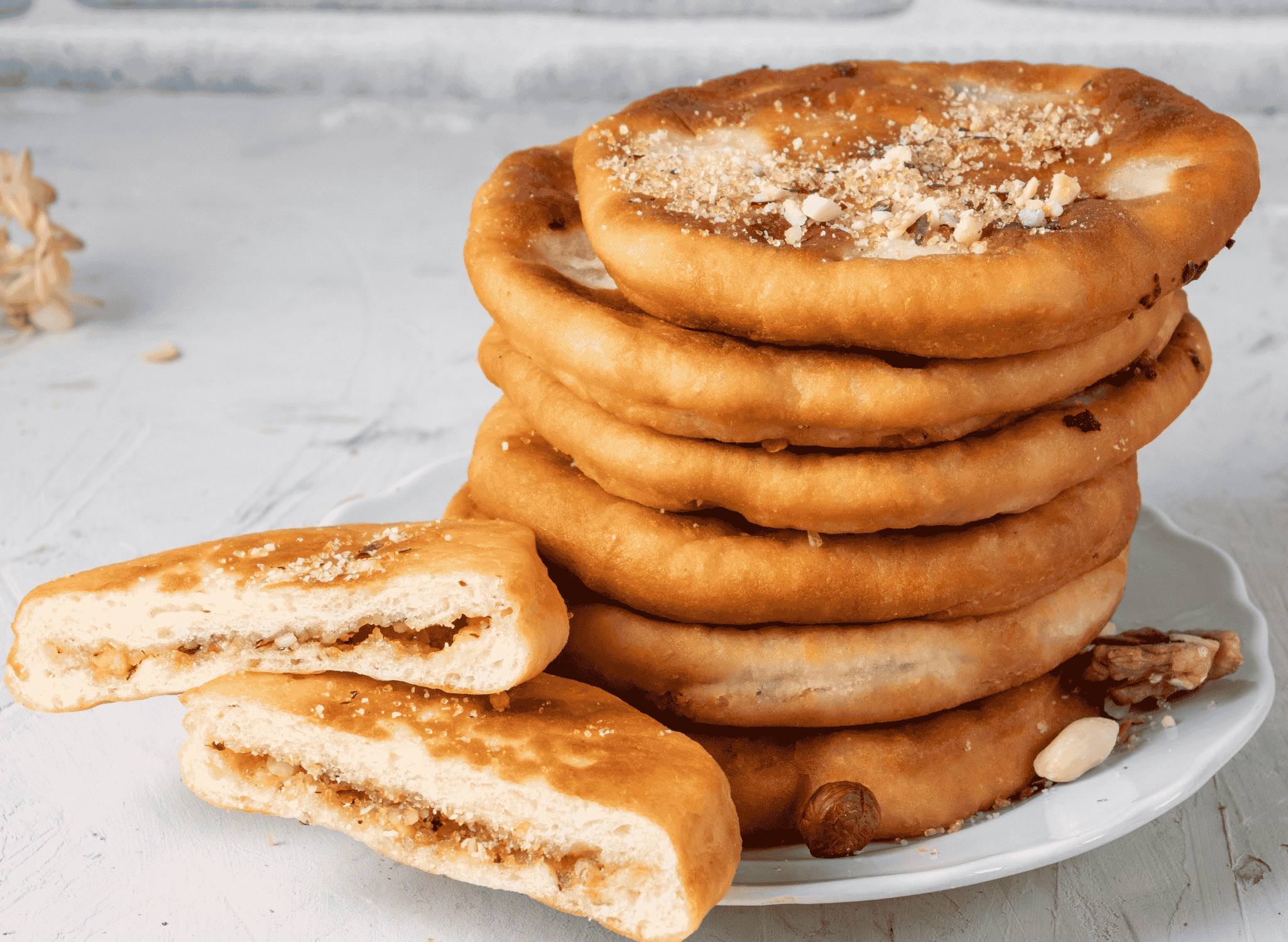
Hotteok are Korean pancakes with a crisp fried surface, soft dough and a pocket of cinnamon sugar inside. The filling melts as they cook, leaving chopped walnuts suspended in a warm brown sugar syrup. Give the first pancake a few minutes to cool before biting into it, even when the outside feels comfortable to hold.
This recipe makes eight pancakes, enough for four people having two each. Allow around two hours, with most of the waiting taken up by the dough rising. Cook in small batches and serve as they’re ready, while the surface still has its crunch.
Want to dive deeper into Korean Cuisine? Don’t miss our post on 17 Traditional Korean Foods to Try
What Is Hotteok?
Hotteok, written 호떡 in Korean, is made from filled yeast dough pressed flat in a frying pan. Unlike a pourable pancake batter, the dough has to stretch around the filling and seal at the top. The first contact with the pan sets the seam before the pancake is turned and flattened.
Brown sugar, cinnamon and chopped nuts make a familiar sweet filling. You’ll also find seed filled and savoury versions. Here, the walnuts are chopped finely enough that they don’t poke through the dough, and the sugar melts inside the sealed parcel rather than being made into a syrup beforehand.
Ingredients and Taste
Plain flour gives the dough enough strength to stretch and hold the filling. Warm milk adds flavour, and a little oil keeps the dough supple. It should feel soft and tacky rather than firm and dry. Lightly oiled hands make shaping easier without working extra flour into each piece.
Glutinous rice flour appears in some hotteok recipes to give a more elastic chew, but it isn’t essential for this wheat flour version. It’s also called sweet rice flour, although it isn’t sweetened. Ordinary rice flour behaves differently, so there’s no need to buy either for the recipe below.
Light brown soft sugar gives a mellow flavour to the filling, with cinnamon running through the syrup. The nuts add small crunchy pieces. A fine chop matters more than the choice between walnuts and peanuts because larger pieces can tear the thin dough as it’s pressed.
A Taste of History
Hotteok developed from foods brought to Korea by Chinese migrants in the late nineteenth century. The Academy of Korean Studies records Chinese run hotteok shops in Seoul by 1889. The pancakes sold on Korean streets today developed from those earlier preparations, with fillings and cooking methods changing over time.
The sugar and cinnamon version is closely associated with cold weather snacking. Korea Tourism Organization describes hotteok among the winter foods sold at markets around the country.
Do You Need a Hotteok Press?
A broad, sturdy spatula works well. Lightly oil its underside and press gradually rather than forcing the filled ball flat in one push. A dedicated press can make an even circle, but the important part is leaving enough dough around the filling to stop the syrup escaping.
How to Make Hotteok
Mix a soft dough, let it rise and wrap it around the dry cinnamon sugar filling. Seal each parcel before cooking and use moderate heat so the dough cooks through as the sugar melts. See the recipe card at the bottom for exact ingredient quantities and printable cooking instructions.
Ingredients
For the dough
- Plain flour
- Caster sugar
- Fine sea salt
- Instant yeast
- Whole milk
- Neutral vegetable oil
For the filling
- Light brown soft sugar
- Ground cinnamon
- Walnuts, finely chopped
For shaping and frying
- Neutral vegetable oil
Equipment
Use a large mixing bowl, kitchen scales, a small bowl for the filling, a dough scraper and a nonstick frying pan with a lid. A pan about 28 cm across allows space for two pancakes once flattened. Have a wide spatula and a wire rack ready before you start frying.
Cooking Instructions
Step 1: Mix the Dough
Combine the flour, caster sugar, salt and instant yeast. Stir in the warm milk and oil, then knead in the bowl until the dough is evenly mixed and stretchy. If it feels stiff, add a little of the extra milk specified in the card. A soft, tacky dough is easier to wrap than a dry one.
Step 2: Let the Dough Rise
Cover and leave somewhere warm until roughly doubled in size. Judge the dough by its volume rather than the clock alone. A cool kitchen will slow it down. While it rises, mix the brown sugar, cinnamon and finely chopped walnuts.
Step 3: Divide and Fill
Gently deflate the risen dough and divide it into equal portions using lightly oiled hands and a scraper. Flatten one piece into a disc, keeping the centre a little thicker than the edges. Spoon the filling into the middle, gather the edges around it and pinch closed.
Step 4: Set the Seam and Flatten
Warm a thin layer of oil in the pan. Place two filled parcels seam side down, with room between them. Let the base set briefly, then turn and gradually press each parcel into a flat pancake. Stop if the filling begins to push through a thin patch.
Step 5: Cook Through
Cook both sides until golden, lowering the heat if they colour too quickly. Cover briefly near the end to help the thicker edges cook. Check the first pancake by cutting into it after a short rest: the filling should be syrupy and the dough cooked through, without a sticky raw layer.
Step 6: Cool Briefly and Serve
Move the pancakes to a rack and repeat with the remaining dough. Let each batch cool briefly before serving. Avoid stacking them while hot, as trapped steam softens the fried surface.
Variations and Substitutions
Peanuts instead of walnuts: Use finely chopped roasted unsalted peanuts in the same amount. Both give crunch; peanuts have a stronger roasted flavour.
Without nuts: Leave them out and divide the sugar and cinnamon evenly between the pancakes. Check ingredient labels and preparation surfaces if cooking for someone with a nut allergy.
Milk alternative: An unsweetened plant drink can replace the milk. The flavour will differ slightly, but the dough should still be soft and tacky. This remains a wheat dough and is not gluten free.
Cooking Tips for Hotteok
Keep filling away from the seam. Sugar caught between the dough edges can prevent them from sticking. Brush off loose filling before pinching, and use a little dough from a thicker area to patch a small hole before frying.
Use a gentle hand with the press. A pancake that’s too thick can brown before its centre cooks. Press towards an even thickness, but don’t force it paper thin. Start with two at a time so you can turn and flatten them without rushing.
Clear leaked sugar between batches. It burns quickly and can leave bitter patches on the next pancakes. Remove the pan from the heat and carefully wipe out cooled residue before adding fresh oil. Don’t reach into hot oil with kitchen paper.
How to Store and Reheat Hotteok
Storing
Hotteok lose their crispness as they sit. Cool leftovers on a rack, then cover and refrigerate within two hours. Eat within 48 hours or freeze.
Freezing
Once cool, separate the pancakes with baking paper and freeze in a sealed container or bag. Use within two months for best texture; this is a quality target rather than a safety expiry.
Defrosting
Thaw in the fridge and use within 24 hours. Keep the pancakes separated so you can take out only what you need.
Reheating
Reheat once in a lightly oiled frying pan over low heat. Cover initially, turn occasionally and uncover to crisp the surface once the centre is steaming hot. Let the filling cool a little before eating. A microwave will soften the crust rather than restore its crunch.
Korean Hotteok (Sweet Pancakes)
Ingredients
Dough
- 250 g plain flour
- 8 g caster sugar
- 4 g fine sea salt
- 3 g instant yeast about 1 teaspoon
- 180 ml whole milk warmed to about 35 to 38°C
- Up to 20 ml additional milk only if needed
- 30 ml neutral vegetable oil
Filling
- 100 g light brown soft sugar
- 2 g ground cinnamon about 1 teaspoon
- 15 g walnuts finely chopped
Shaping and Frying
- 45 ml neutral vegetable oil divided between lightly oiling hands and the pan
Instructions
- Stir the flour, caster sugar, salt and instant yeast together in a large bowl. Add the 180 ml warm milk and 30 ml oil. Mix thoroughly, then knead in the bowl for about 5 minutes until cohesive and stretchy. It should be soft and tacky. If stiff or showing dry flour, add the extra milk 5 ml at a time, stopping as soon as the dough softens.
- Cover the bowl and leave in a warm, draught free place for 60 to 90 minutes, or until roughly doubled. Allow longer in a cold kitchen. Meanwhile, stir together the brown sugar, cinnamon and walnuts. Divide the filling into eight equal portions, about 15 g each.
- Lightly oil your hands and scraper using a little of the shaping oil. Gently deflate the dough and divide into eight equal pieces, about 60 g each. Keep covered while working. Flatten one into a disc about 9 to 10 cm wide, keeping the centre slightly thicker. Put one portion of filling in the centre, gather the edges around it and pinch firmly closed, keeping sugar out of the seam. Repeat with the remaining dough.
- Heat about 10 ml oil in the nonstick pan over medium low heat until warm and shimmering, without smoking. Place two parcels seam side down, leaving space for flattening. Cook for 30 to 45 seconds to set the base, then turn. With a lightly oiled spatula, gradually press each into a circle about 10 cm wide and 7 to 8 mm thick. Avoid forcing filling through the dough.
- Cook the flattened side for about 2 minutes, until golden. Turn and cook the other side for about 2 minutes. Lower the heat and cover for the final 1 minute if needed to cook the edges. The two sides should be golden with no raw dough at the edge. Rest and cut open the first pancake to check the centre: the dough must be cooked through and the sugar melted. If it is doughy, return it to the pan over low heat, cover and continue cooking; cook later batches more gently or a little longer.
- Transfer to a wire rack. Repeat with the remaining parcels, replenishing the oil in thin layers from the measured amount as needed. Allow about 5 minutes cooling before eating and longer if the filling is still too hot. The syrup can be much hotter than the surface.
Notes
- The 90 minute rise is a planning allowance, not a guarantee. If it doubles in 60 minutes, total time is about 1 hour 55 minutes. Four batches of roughly 5 minutes plus pan heating are allowed in the cook field. Shaping is included in active prep; filling preparation overlaps the rise.
- Plain flour is intentional. Rice flour is not required. Do not replace the wheat flour with ordinary rice flour or a gluten free blend under these directions. Flour brands absorb differently, which is why the last 20 ml milk is held back.
- Replace walnuts with 15 g finely chopped roasted unsalted peanuts, or omit them and divide the remaining filling evenly. Use an unsweetened plant drink instead of milk if needed.
- Cool on a rack and refrigerate within 2 hours. Use within 48 hours or freeze, separated with baking paper. Use frozen pancakes within 2 months for best texture. Defrost in the fridge and use within 24 hours. Reheat once over low heat until steaming hot throughout, then cool the syrup briefly before eating.