- View
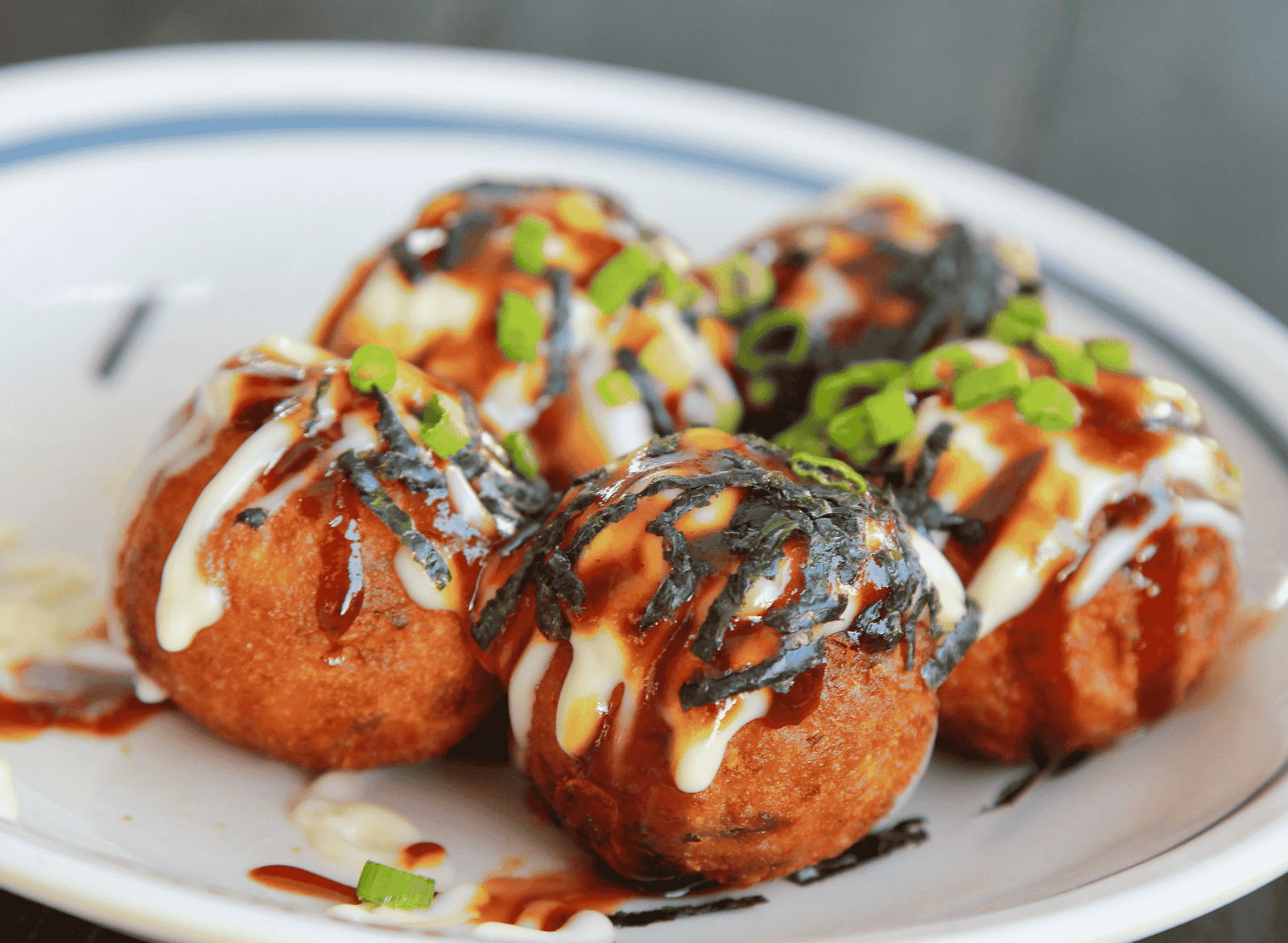
Takoyaki are little rounds of savoury batter with a piece of octopus at the centre. The outside goes golden in the pan, while the inside stays soft enough to yield when you break it open. Pickled red ginger cuts through the richness of the sauce and mayonnaise drizzled over the top.
This recipe makes about 24 pieces in two batches. Chop everything before you heat the pan: once the batter goes in, there’s little time to stop and slice a spring onion. Serve each batch while the outside is still crisp, but let the centres cool briefly before taking a bite.
Want to dive deeper into Japanese Cuisine? Don’t miss our post on 26 Traditional Japanese Foods to Try
What Is Takoyaki?
Takoyaki (たこ焼き) is an Osaka street snack made by cooking thin batter in a pan with rounded wells. The shape comes from turning the batter as it sets. A first quarter turn leaves a gap for the unset batter to flow into, and further turns close and brown the other side.
The filling starts with cooked octopus, so the time in the pan is for setting the batter and heating the centre. The octopus should have a little bite. The batter around it stays moist and tender even when it’s fully cooked, which is part of what makes takoyaki different from a fried breaded snack.
Takoyaki also makes sense as a dish to cook at the table. In Kansai, people sometimes gather for a takopa, or takoyaki party, and cook successive batches together. The first few balls may come out uneven. They’ll still taste good if the batter has cooked through.
Ingredients and Taste
Dashi is a Japanese stock that gives the batter a savoury flavour before any sauce goes on. Prepared dashi works well here. If you’re using granules, mix them with water according to the packet and let the stock cool before adding it to the egg. Taste it first so you know whether the batter needs extra salt.
Look for octopus labelled cooked or boiled at a fish counter or Japanese food shop. Pat it dry so it doesn’t water down the batter around it. Small pieces are easier to eat than a single large chunk, and you can tuck a couple into each well if they’re uneven.
Beni shoga is red pickled ginger with a sharp, salty taste. It’s different from the milder sliced ginger served with sushi. Tenkasu, or tempura crumbs, add little pockets of richness, while spring onion gives the filling a fresh edge. Chop both the ginger and onion finely so they tuck inside the shell.
Takoyaki sauce is thick, sweet and tangy. Japanese mayonnaise softens its sharpness, while aonori, dried green seaweed, adds a grassy, savoury note. Finish with thin bonito flakes, or katsuobushi. The steam from the hot balls makes the flakes curl as they settle.
A Taste of History
Osaka shop Aizuya traces its takoyaki to founder Tomekichi Endo in the 1930s. In the shop’s account, Endo had been making rajiōyaki, a round snack with a meat filling. Hearing that cooks in nearby Akashi used octopus prompted him to try it in his own batter.
Aizuya seasoned its batter so the balls could be eaten plain. The familiar finish with sauce, green seaweed and mayonnaise came with later variations.
Do You Need a Takoyaki Pan?
You need rounded wells for the turning method below. A flat frying pan can cook the batter, but it won’t give you the same shape. Use a hob compatible takoyaki pan or an electric model and follow its heat guidance. If you have induction, check the pan’s base and compatibility before buying.
Use wooden skewers or picks made for the pan if it has a nonstick coating. Two picks make turning easier: one loosens the shell while the other guides it as it rolls. A large fork is harder to manoeuvre between the wells.
How to Make Takoyaki
Pour the batter into a well oiled pan, add the fillings and wait for a thin shell to form before you turn it. Work in small batches so you have time to tuck the edges into each well. See the recipe card at the bottom for exact ingredient quantities and printable cooking instructions.
Ingredients
For the batter
- Plain flour
- Baking powder
- Fine sea salt, if needed
- Egg
- Cooled dashi, prepared stock or made from granules
For the filling and pan
- Cooked octopus
- Beni shoga, finely chopped
- Tenkasu
- Spring onion, finely sliced
- Neutral cooking oil
To finish
- Takoyaki sauce
- Japanese mayonnaise
- Aonori
- Bonito flakes
Equipment
Use a takoyaki pan with rounded wells, a brush or suitable applicator for the oil, two takoyaki picks or wooden skewers, and a jug with a spout. Have a mixing bowl, whisk, serving plate and clean food thermometer ready.
Cooking Instructions
Step 1: Prepare the Filling and Batter
Pat the octopus dry and cut it into small pieces. Set the ginger, tempura crumbs and spring onion within reach. Whisk the cooled dashi and egg, then add the flour, baking powder and salt if needed. Stop when no dry pockets remain. The batter should pour in a thin stream.
Step 2: Heat and Oil the Pan
Heat the pan over medium heat. Brush oil around the bottoms and sides of the wells and over the surface between them. A small drop of batter should sizzle promptly when it hits the pan. If the oil starts smoking, take the pan off the heat briefly and lower the setting.
Step 3: Fill the Wells
Stir the batter to lift any flour that has settled. Pour into the wells, leaving room for the octopus. Add the octopus, ginger, tempura crumbs and spring onion, then top up with batter to the rims. A thin spill across the top is useful because you’ll tuck it in to complete the balls.
Step 4: Make the First Turn
Wait until the rims look set and a pick lifts the shell without tearing. Separate any batter joining the wells, then turn each piece about a quarter turn. Let the liquid batter flow into the bottom of the well and tuck the loose edges towards the centre. Work from the wells that set first.
Step 5: Round and Cook Through
When the new underside holds its shape, turn again to close the ball. Keep rolling the balls until they’re evenly golden. If they brown quickly, reduce the heat so the centre has time to set. Cut one open to check: it should be hot and soft inside, without loose raw batter. Use the temperature check in the card if you’re unsure.
Step 6: Dress and Serve
Lift the balls onto a plate, and let them cool briefly before eating. Drizzle over the sauce and mayonnaise, then scatter on the aonori and bonito flakes. Reoil the pan and repeat with the remaining batter and fillings.
Variations and Substitutions
If you can’t find cooked octopus, use cooked peeled prawns cut into small pieces. They’re sweeter and less chewy, and the result is a prawn version rather than the classic octopus filling. Avoid using raw octopus in this quick method.
If you don’t have tenkasu, leave it out. The balls will be a little less rich but will still take shape. Okonomiyaki sauce is a good stand in for takoyaki sauce; both are thick enough to stay on the surface.
Cooking Tips for Takoyaki
If the first turn tears the shell, wait a little longer before trying again. If the shell is set but sticks to the well, ease a skewer around the edge. Brush oil right up the sides before the next batch. Avoid scraping a coated pan with metal.
If the balls are lopsided, tuck the loose batter inside at the first turn and keep rolling them as each side firms up. Some wells cook faster than others. Watch each ball and take them out individually as they finish.
If the outsides brown before the centres set, lower the heat and keep turning the balls. Don’t judge doneness from colour alone. For the next batch, give the pan a moment to cool before refilling it.
How to Store and Reheat Takoyaki
Storing
Save any extras before adding the toppings. Cool them in a single layer and refrigerate in a covered container within two hours. Eat within 48 hours or freeze. Chilled takoyaki will lose some of their crispness.
Freezing
Freeze cooled balls in a single layer, then transfer to a sealed freezer container once firm. Aim to use them within a month for best texture.
Defrosting
Defrost fully in the fridge. Use within 24 hours of thawing.
Reheating
Reheat once in a lightly oiled pan over gentle heat, turning often, until steaming hot all the way through. Keep the heat low enough that the centres heat before the shells darken. Add sauce and toppings after reheating and let the centres cool slightly before eating.

Takoyaki (Japanese Octopus Balls)
Ingredients
Batter
- 120 g plain flour
- ¼ tsp baking powder
- 1 large egg about 50 g without the shell
- 300 ml cooled prepared dashi; if using granules prepare the stock according to the packet before measuring
- Up to 1 g fine sea salt optional; omit if the dashi is already well salted
Filling and Cooking
- 150 g cooked octopus patted dry and cut into pieces about 1 to 1.5 cm across
- 20 g drained beni shoga finely chopped
- 10 g tenkasu
- 15 g spring onion finely sliced
- 20 ml neutral cooking oil divided between the two batches
Toppings
- 45 ml takoyaki sauce
- 30 ml Japanese mayonnaise
- 1 tsp aonori
- 3 g bonito flakes
Instructions
- Divide the octopus, ginger, tenkasu and spring onion roughly in half for the two batches. Whisk the egg and cooled dashi in a bowl. Add the flour and baking powder. Add the salt only if the stock tastes lightly seasoned. Whisk just until smooth and pourable, then transfer to a jug.
- Heat the 12 well pan over medium heat, or use the manufacturer’s recommended cooking setting. Brush about 10 ml oil across the wells and the surface between them. The oil should shimmer without smoking. Check with a drop of batter: it should sizzle promptly.
- Stir the batter before pouring. Fill each well about three quarters full, then distribute the first half of the octopus, ginger, tenkasu and spring onion between the wells. Aim for roughly 6 g octopus per well, in one or more pieces. Top up to the rims with some of the first half of the batter. A thin layer across the surface is fine; avoid flooding the pan.
- After about 2 to 3 minutes, or when a thin shell has set and releases, trace around each well and separate any connecting batter. Lift and roll each piece about 90 degrees. Let unset batter flow into the open part of the well and tuck loose edges in with the picks. If the shell tears when you lift it, let it set a little longer.
- After about 1 to 2 more minutes, roll again so the opening faces down. Keep turning as the shells firm, allowing roughly 9 to 12 minutes per batch from filling to finish. Reduce the heat if the shell darkens too quickly. Open a representative ball: it should be steaming inside, with a soft centre and no loose uncooked batter. If checking with a clean probe, use 75°C for at least 30 seconds at the centre. If still underdone, keep turning over lower heat and check again.
- Transfer to a serving plate. Use half the takoyaki sauce, mayonnaise, aonori and bonito flakes on the first batch. Brush the pan with the remaining oil as needed, stir the batter again and repeat with the remaining fillings and toppings. Let each batch cool briefly before eating; the centres stay hot after the shell cools.