- View
Japanese cuisine offers countless treasures, yet few dishes deliver the same soul warming satisfaction as a steaming bowl of udon. These thick wheat noodles have sustained Japanese communities for centuries, appearing in everything from quick lunch counters to refined kaiseki meals.
Udon represents comfort in its purest form. The noodles possess a distinctive chewiness that Japanese speakers call “koshi”, a texture that keeps you coming back for another slurp. Whether served hot in a delicate broth or cold with a dipping sauce, udon adapts beautifully to seasons and regional preferences.
What makes udon truly special is its democratic nature. You’ll find it at humble street stalls and upscale restaurants alike, each serving their own interpretation. The noodles themselves take centre stage, with toppings and broths playing supporting roles rather than dominating the experience.
From bustling Tokyo train stations to quiet Kyoto temples, udon sustains millions of people daily. Its simplicity invites endless variation, whilst its fundamental character remains unchanged across Japan’s diverse culinary landscape.
Want to dive deeper into Japanese Cuisine? Don’t miss our post on 26 Traditional Japanese Foods to Try
What Is Udon?
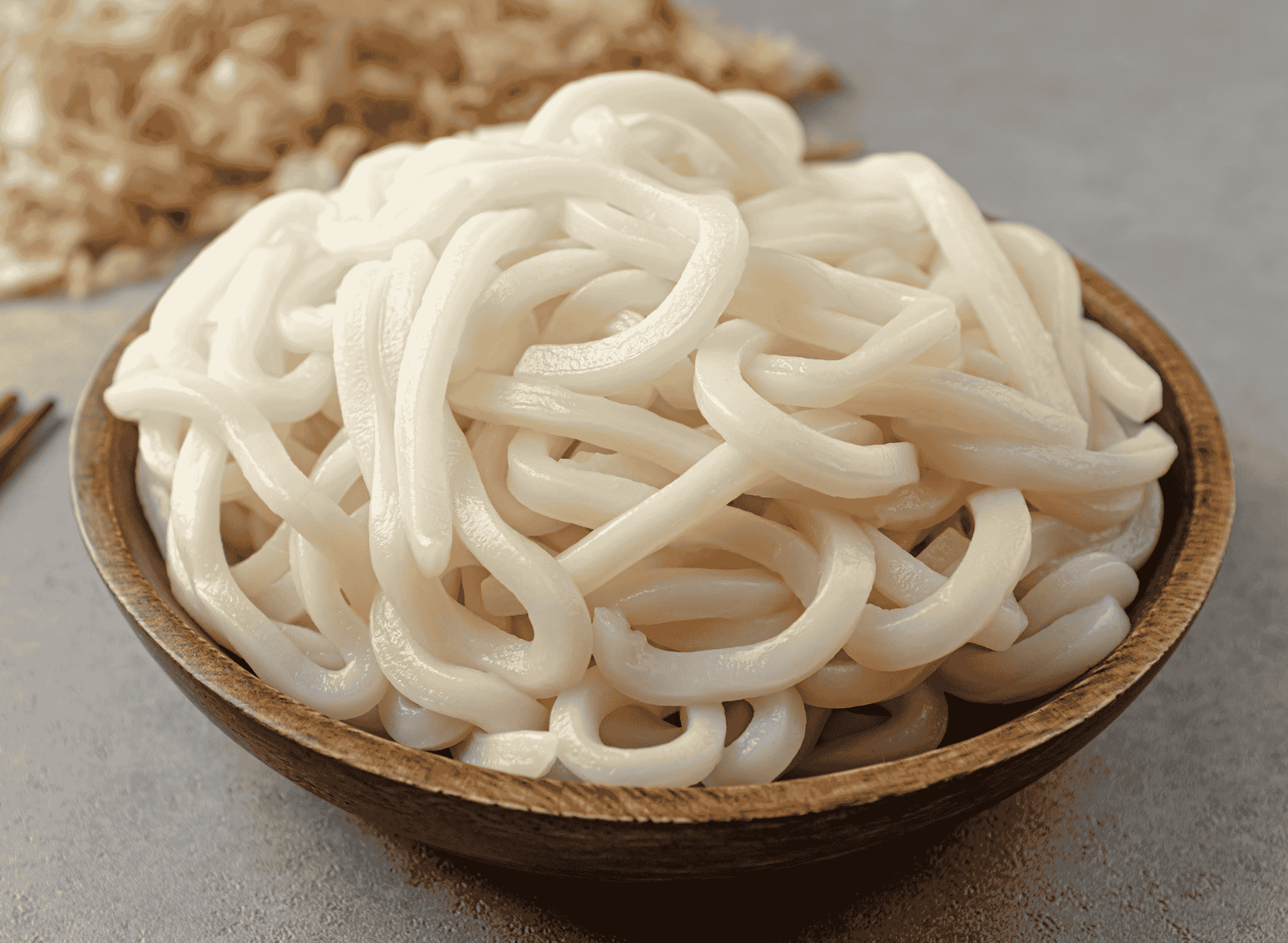
Udon consists of thick wheat noodles made from wheat flour, water, and salt. The strands measure anywhere from two to four millimetres thick, making them substantially heartier than delicate somen or medium ramen noodles.
Fresh udon has a pale, almost ivory colour with a smooth, slightly glossy surface. When cooked properly, the noodles maintain a firm, springy texture that offers satisfying resistance to your teeth without feeling tough or rubbery.
The preparation method varies across Japan’s regions. Sanuki udon from Kagawa Prefecture is particularly renowned for its firm texture, whilst Osaka’s udon tends towards softness. These differences stem from variations in kneading techniques, resting times, and water content.
Udon typically arrives in a bowl of hot broth called kakejiru, made from dashi stock, soy sauce, and mirin. However, you might also encounter it served cold on a bamboo mat with a separate dipping sauce, especially during summer months when lighter meals appeal to the appetite.
The toppings range from simple to elaborate. Green onions, tempura, fried tofu, raw egg, or kamaboko fish cake commonly accompany the noodles. Each addition brings its own flavour and texture, creating combinations that never feel repetitive despite using similar base ingredients.
Ingredients and Taste
Making udon requires only three essential ingredients: wheat flour, water, and salt. The wheat flour used is typically medium protein, creating noodles with ideal elasticity. The ratio of ingredients and kneading technique determine the final texture and quality.
The dough must be kneaded extensively to develop gluten, which gives udon its characteristic chewiness. Traditional methods involve wrapping the dough in plastic and treading on it with your feet, a technique that remains common in dedicated udon shops across Japan.
The broth, or tsuyu, builds its foundation on dashi stock made from kombu seaweed and katsuobushi bonito flakes. This creates an umami-rich base that’s seasoned with soy sauce and mirin, resulting in a savoury yet slightly sweet liquid that complements rather than overwhelms.
When you taste udon, the experience begins with texture. The noodles offer that distinctive bounce and chew, absorbing just enough broth to carry flavour whilst maintaining their integrity. They taste mildly wheaty, clean, and subtly nutty without any distracting sharpness.
The broth delivers waves of umami that feel both complex and comforting. It’s never aggressively salty or heavy, instead providing a gentle savouriness that warms from within. Each slurp brings noodles and broth together in perfect proportion.
Cold udon presents a different experience entirely. The chilled noodles feel refreshing and clean, with their texture becoming even more pronounced. The dipping sauce, usually more concentrated than hot broth, clings to each strand, delivering bursts of flavour between bites.
A Taste of History
Udon’s journey to Japan likely began during the Nara period in the 8th century, when Buddhist monks and envoys returning from China brought wheat-based noodle techniques. Early versions differed significantly from today’s udon, being thinner and less refined in texture.
The name “udon” itself appears in documents from the Kamakura period around the 13th century. At this time, the noodles served primarily as offerings at temples and food for monks, not yet the everyday staple they would become centuries later.
During the Edo period from the 17th to 19th centuries, udon gained widespread popularity throughout Japan. Regional variations began emerging as different areas developed their own techniques and preferences. Kagawa Prefecture became particularly famous for its udon, earning the nickname “Udon Prefecture” that persists today.
The development of commercial flour milling during the Meiji era made wheat flour more accessible and affordable. This democratisation allowed udon to transition from occasional treat to daily sustenance for working class Japanese families seeking filling, economical meals.
Post-war Japan saw udon evolve further as quick service restaurants called “tachigui” or standing noodle bars proliferated in urban areas. These establishments served udon to hurried commuters and workers, cementing the noodles’ reputation as convenient comfort food that never compromises on satisfaction.
Today, udon occupies a cherished place in Japanese food culture. Speciality shops dedicate themselves entirely to perfecting these noodles, whilst families maintain treasured recipes passed down through generations. The simplicity that defined udon centuries ago continues to define it now.
How to Make Udon (Thick Wheat Noodles)
Udon is one of Japan’s most beloved noodle dishes, known for its chewy texture and versatility. Making udon from scratch is a tactile and rewarding process that connects you to centuries of Japanese culinary tradition. With simple ingredients and patience, you’ll create noodles that are soft yet resilient, perfect for serving in hot broth or chilled with dipping sauce. See the recipe card at the bottom for printable directions
Ingredients
For the Noodles:
- 400 g plain flour (high gluten flour preferred)
- 1 tsp salt
- 180 ml water (room temperature)
- Cornflour or potato starch, for dusting
For the Broth (Kakejiru):
- 1 litre dashi stock (made from kombu and bonito flakes)
- 2 tbsp soy sauce
- 2 tbsp mirin
- 1 tsp sugar
For Serving:
- 2 spring onions, finely sliced
- 1 sheet nori (seaweed), finely shredded
- Shichimi togarashi (Japanese seven spice), optional
Cooking Instructions
Step 1: Prepare the dough
In a large mixing bowl, dissolve the salt in water. Gradually add the salted water to the flour while mixing with your hands or chopsticks until small clumps form. Combine the mixture into a rough dough and knead it until it becomes firm but elastic. Wrap the dough tightly in cling film and rest for 30 minutes at room temperature.
Step 2: Knead for texture
After resting, knead the dough again until smooth. Traditional udon makers sometimes use their feet (wrapped in plastic) to press the dough for an even texture. Aim for a supple yet dense consistency. Rewrap and let the dough rest for another 2 hours to relax the gluten.
Step 3: Roll out the dough
Dust your work surface with cornflour or potato starch. Roll out the rested dough into a large rectangle, about 3 mm thick. Keep rotating the dough to maintain an even shape and prevent sticking.
Step 4: Fold and cut the noodles
Lightly dust the rolled dough with starch, fold it loosely into thirds, and cut into 3–4 mm wide strips using a sharp knife. Gently separate the noodles with your fingers to prevent clumping.
Step 5: Boil the noodles
Bring a large pot of water to a rolling boil. Add the udon and stir gently to prevent sticking. Cook for 10–12 minutes until tender yet chewy. Taste a strand to check for doneness.
Step 6: Rinse and cool
Drain the noodles immediately and rinse under cold running water to stop the cooking process. Gently rub the noodles between your hands to remove excess starch and enhance their texture.
Step 7: Prepare the broth
While the noodles rest, make the broth. In a saucepan, combine dashi stock, soy sauce, mirin, and sugar. Bring to a gentle simmer over medium heat, stirring until the sugar dissolves. Do not boil vigorously, as it may cloud the broth.
Step 8: Assemble the dish
Divide the noodles into four serving bowls. Pour the hot broth over the noodles, ensuring each portion is evenly covered. Garnish with sliced spring onions and shredded nori.
Step 9: Add final touches
For a touch of warmth and spice, sprinkle with shichimi togarashi just before serving. Serve immediately while the noodles are steaming hot.
Step 10: Serve and enjoy
Udon can be served plain or accompanied by tempura, tofu, or vegetables for a heartier meal. The balance between chewy noodles and savoury broth is the hallmark of an authentic Japanese udon experience.
Variations and Substitutions
- Flour substitute: Bread flour can replace plain flour for a chewier texture.
- Dashi alternative: If kombu and bonito flakes are unavailable, use instant dashi granules dissolved in water.
- Vegetarian broth: Replace bonito flakes with dried shiitake mushrooms when making dashi.
- Serving style: In warmer months, serve the noodles chilled with tsuyu dipping sauce instead of broth.
Cooking Tips for Perfect Udon
- Allow enough resting time for the dough to relax, ensuring elasticity and chewiness.
- Knead thoroughly to develop gluten; this defines the noodle’s structure.
- Do not skip rinsing after boiling; it prevents stickiness and enhances mouthfeel.
- Keep broth light and balanced to complement the subtle wheat flavour.
- Slice noodles evenly for consistent cooking.
How to Store and Reheat
Storing Fresh Udon
Fresh udon requires careful storage to maintain its quality and texture. If you’ve purchased uncooked fresh noodles, keep them in their original packaging and refrigerate immediately. They’ll stay good for three to five days when properly chilled.
Cooked udon should be cooled quickly under running water to stop the cooking process, then drained thoroughly. Place the noodles in an airtight container with a light coating of oil to prevent sticking. They’ll keep in the refrigerator for up to two days maximum.
For longer storage, freezing works surprisingly well with udon. Portion the cooked, cooled noodles into serving sizes, then wrap tightly in cling film before placing in freezer bags. Frozen udon maintains decent quality for up to one month when stored properly.
Reheating Methods
Reheating udon properly ensures you don’t end up with mushy, overcooked noodles. For refrigerated cooked udon, bring a pot of water to a rolling boil. Drop the noodles in for just 30 to 60 seconds, swirling them gently to separate the strands.
Drain the reheated noodles immediately and add them to your prepared hot broth. Leaving them in the boiling water too long will destroy that essential chewy texture that makes udon special. Quick heating preserves the bounce and firmness.
Frozen udon can go straight from freezer to boiling water without thawing. Allow about two to three minutes for frozen noodles to heat through completely. Test one strand to ensure it’s warmed to the centre before draining and serving.
For cold udon dishes, simply let the frozen or refrigerated noodles come to room temperature, or rinse them under cool water to refresh them. Cold preparations are more forgiving since you’re not concerned with maintaining heat throughout the serving process.
Avoid microwaving udon if possible, as it creates uneven heating and can make the noodles rubbery. If you must use a microwave, add a splash of water, cover the bowl, and heat in 30 second intervals, stirring between each burst to distribute heat evenly.
Japanese Udon (Thick Wheat Noodles)
Ingredients
For the Noodles:
- 400 g plain flour high gluten flour preferred
- 1 tsp salt
- 180 ml water room temperature
- Cornflour or potato starch for dusting
For the Broth (Kakejiru):
- 1 litre dashi stock made from kombu and bonito flakes
- 2 tbsp soy sauce
- 2 tbsp mirin
- 1 tsp sugar
For Serving:
- 2 spring onions finely sliced
- 1 sheet nori seaweed, finely shredded
- Shichimi togarashi Japanese seven spice, optional
Instructions
- In a large mixing bowl, dissolve the salt in water. Gradually add the salted water to the flour while mixing with your hands or chopsticks until small clumps form. Combine the mixture into a rough dough and knead it until it becomes firm but elastic. Wrap the dough tightly in cling film and rest for 30 minutes at room temperature.
- After resting, knead the dough again until smooth. Traditional udon makers sometimes use their feet (wrapped in plastic) to press the dough for an even texture. Aim for a supple yet dense consistency. Rewrap and let the dough rest for another 2 hours to relax the gluten.
- Dust your work surface with cornflour or potato starch. Roll out the rested dough into a large rectangle, about 3 mm thick. Keep rotating the dough to maintain an even shape and prevent sticking.
- Lightly dust the rolled dough with starch, fold it loosely into thirds, and cut into 3–4 mm wide strips using a sharp knife. Gently separate the noodles with your fingers to prevent clumping.
- Bring a large pot of water to a rolling boil. Add the udon and stir gently to prevent sticking. Cook for 10–12 minutes until tender yet chewy. Taste a strand to check for doneness.
- Drain the noodles immediately and rinse under cold running water to stop the cooking process. Gently rub the noodles between your hands to remove excess starch and enhance their texture.
- While the noodles rest, make the broth. In a saucepan, combine dashi stock, soy sauce, mirin, and sugar. Bring to a gentle simmer over medium heat, stirring until the sugar dissolves. Do not boil vigorously, as it may cloud the broth.
- Divide the noodles into four serving bowls. Pour the hot broth over the noodles, ensuring each portion is evenly covered. Garnish with sliced spring onions and shredded nori.
- For a touch of warmth and spice, sprinkle with shichimi togarashi just before serving. Serve immediately while the noodles are steaming hot.
- Udon can be served plain or accompanied by tempura, tofu, or vegetables for a heartier meal. The balance between chewy noodles and savoury broth is the hallmark of an authentic Japanese udon experience.