


- View
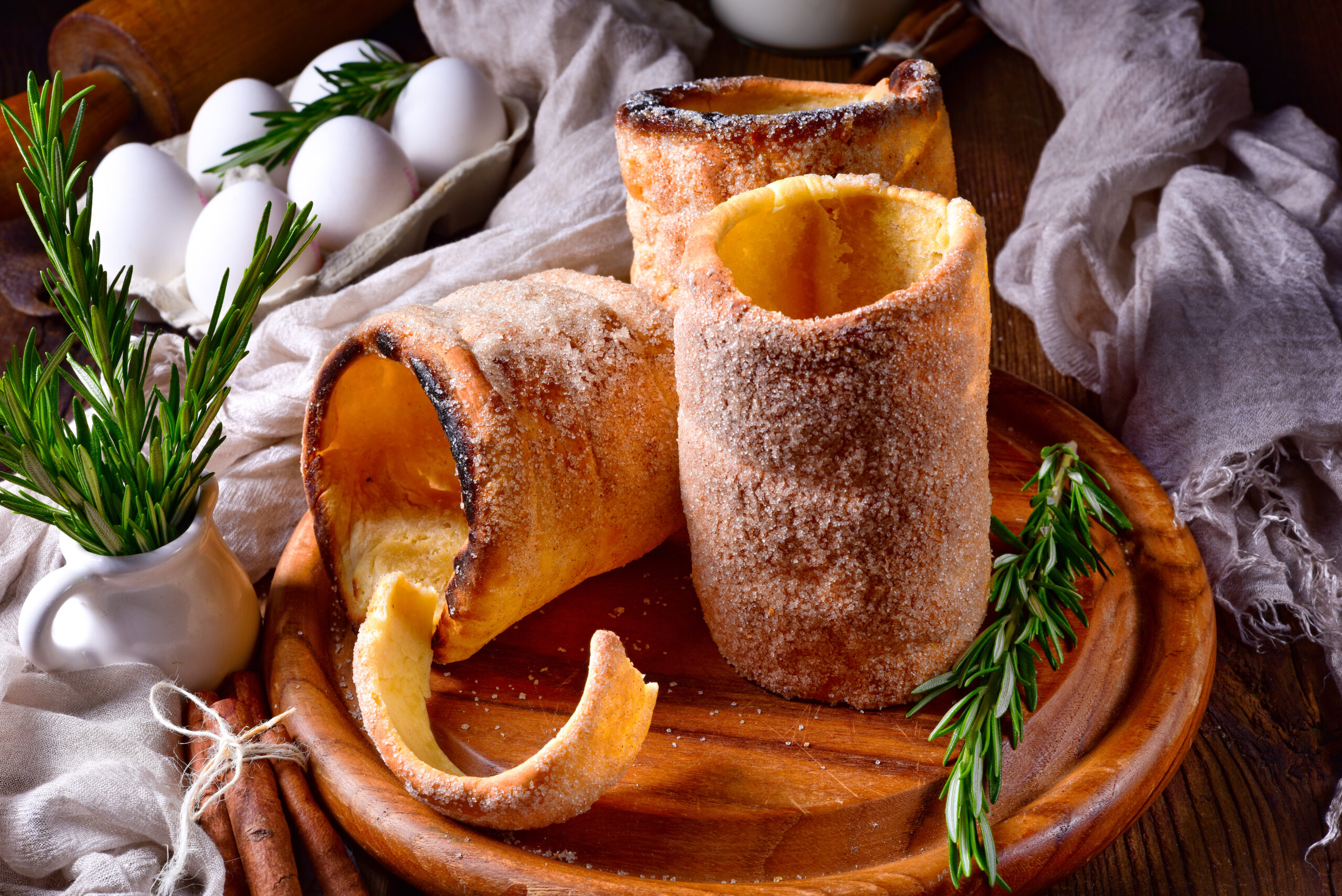
Kürtőskalács is one of those pastries that turns heads before you even taste it. The scent of warm dough, butter and caramelised sugar travels through markets and fairs with real purpose. Fresh from the oven, it arrives crisp on the outside, light within, and shaped like something made for celebration.
In Hungary, this sweet bake is tied to street life, festive gatherings and the pleasure of eating something straight from the heat. It feels playful, almost theatrical, yet there is deep craft behind it. One coil of dough, rolled with care and baked until golden, becomes a pastry that feels both homely and special.
For anyone trying it for the first time, Kürtőskalács offers a texture that keeps changing as you eat. The outer layer has a delicate crackle from toasted sugar, while the inside stays soft and slightly chewy. That contrast is what gives it such charm, along with its warm, buttery aroma.
What Is Kürtőskalács?
Kürtőskalács, often called Chimney Cake in English, is a spit baked sweet dough wrapped around a wooden or metal cylinder. As it turns over heat, the surface bakes evenly and develops a glossy, caramelised crust. Once removed from the mould, it leaves a hollow centre, which gives the pastry its chimney like shape.
The dough itself is enriched, usually with milk, butter, eggs, flour, sugar and yeast. After rising, it is rolled into long strips and wound around the cylinder in neat spirals. A coating of sugar goes on before baking, and that sugar melts into a thin, bronzed shell with a gentle crunch.
It is often finished with extra coatings while still warm. Cinnamon sugar is a familiar favourite, though crushed walnuts, cocoa, vanilla sugar and coconut also appear regularly. Some modern versions are filled with cream or ice cream, but the traditional style keeps the focus on the dough, the crust and that fresh baked perfume.
What makes it memorable is the way it is meant to be eaten. You pull off strips with your fingers, still warm enough to release steam from the centre. It is informal, comforting and a little messy in the best way. This is not a pastry that asks for ceremony. It asks for appetite.
Ingredients and Taste
The ingredient list is simple, though each part matters. Flour gives structure, yeast brings lift, milk and butter soften the crumb, and eggs add richness. Sugar plays two roles, sweetening the dough and creating the caramelised coat. A pinch of salt keeps everything from becoming flat, and vanilla or lemon zest may appear in some recipes.
Taste begins with butter and sweet yeast dough, then quickly moves into toasted sugar and whatever topping has been added. Cinnamon gives warmth, walnut adds earthy depth, and coconut brings a softer finish. Even plain, it has plenty of character. The centre stays tender, while the crust offers just enough bite.
Freshly baked Kürtőskalács is fragrant in a way that feels almost impossible to ignore. The smell of sugar darkening over heat mingles with the richness of the dough, creating something halfway between pastry and confection. It is sweet, certainly, but when made well, the sweetness feels rounded rather than heavy.
Texture plays a large part in its appeal. The first touch is slightly crisp, then the dough gives way with a gentle pull. Some sections are more caramelised than others, which keeps each bite interesting. That unevenness is part of the pleasure. It feels handmade, alive, and far removed from factory neatness.
A Taste of History
Kürtőskalács has deep roots in the Hungarian speaking world, particularly in Transylvania, a region with a rich and layered culinary history. Though widely associated with Hungary today, its story stretches across communities where food, language and custom have long travelled together, shaping shared traditions over generations.
Written references to similar spit baked cakes go back several centuries. Early versions appeared in aristocratic kitchens, where elaborate festive baking held social importance. Over time, the pastry moved beyond grand households and found a place in public celebrations, seasonal fairs and family occasions, where it became something more widely enjoyed.
Its name comes from the Hungarian word for chimney, a direct reference to its hollow form. That shape is not just decorative. When the pastry is lifted from its baking spit, warm air escapes from the centre, carrying the smell of butter and sugar upward. It is easy to understand why the name stayed.
Today, Kürtőskalács remains strongly linked with festive street food culture. You will find it at Christmas markets, town events and bakery stalls, where it is baked in view of passing crowds. That visible process matters. Watching the dough turn and colour over heat is part of the experience, and part of its enduring appeal.
How to Make Kürtőskalács
Kürtőskalács is one of Hungary’s most recognisable street treats, known for its golden spiral crust, caramelised sugar coating, and soft, airy interior. The dough is wrapped around a cylinder, slowly baked and turned until crisp on the outside and tender within. Expect a hands-on process that rewards patience with both aroma and texture. See the recipe card at the bottom for printable directions
Ingredients
- 500 g plain flour
- 7 g dried yeast or 20 g fresh yeast
- 250 ml lukewarm milk
- 80 g caster sugar
- 2 medium eggs
- 80 g unsalted butter, melted
- 1 tsp vanilla extract
- ½ tsp salt
For coating and finishing:
- 100 g caster sugar
- 50 g unsalted butter, melted (for brushing)
- Optional toppings: ground cinnamon, chopped walnuts, desiccated coconut
Cooking Instructions
Step 1: Activate the yeast
To begin, warm the milk until just lukewarm. In a small bowl, mix the yeast with a teaspoon of sugar and a few tablespoons of milk. Leave for 5 to 10 minutes until it becomes frothy, indicating the yeast is active. Move to the next step once ready.
Step 2: Prepare the dough base
Take a large bowl and combine the flour, remaining sugar, and salt. Add the eggs, melted butter, vanilla extract, and activated yeast mixture. Begin mixing until a soft dough forms, then proceed to kneading.
Step 3: Knead the dough
Turn the dough onto a lightly floured surface and knead for about 8 to 10 minutes until smooth and elastic. The dough should feel soft but not sticky. Place it back in the bowl, cover with a cloth, and allow it to rise.
Step 4: First rise
Let the dough rest in a warm place for around 1 hour or until doubled in size. This slow rise develops flavour and gives the cake its signature light interior. Once risen, gently knock back the dough and move forward.
Step 5: Shape into strips
Roll the dough out to roughly 1 cm thickness. Cut into long strips about 1.5 to 2 cm wide. Keep the strips even to ensure uniform baking in the next step.
Step 6: Wrap around moulds
Lightly grease wooden rolling pins or heatproof cylinders. Wrap the dough strips around them in a spiral, slightly overlapping. Press gently so the dough adheres without gaps. Brush the surface with melted butter before continuing.
Step 7: Coat with sugar
Roll the wrapped dough in caster sugar, ensuring an even coating. This sugar will caramelise during baking, forming the classic crisp exterior. Prepare your oven or grill for baking.
Step 8: Bake and rotate
Preheat the oven to 180°C or use a grill. Place the cylinders over a baking tray so they can rotate freely, or turn them by hand every few minutes. Bake for 15 to 20 minutes until golden brown, rotating regularly for even caramelisation.
Step 9: Add finishing toppings
While still warm, roll the baked cakes in your chosen toppings such as cinnamon sugar or chopped nuts. The heat helps the coating stick beautifully. Allow to cool slightly before removing from the moulds.
Step 10: Serve and enjoy
Carefully slide the kürtőskalács off the moulds and serve warm. Tear into sections rather than slicing to preserve its soft interior. It pairs wonderfully with coffee or hot chocolate, and is best enjoyed fresh when the exterior is still crisp.
Variations and Substitutions
- Flavour twist: Add lemon zest or orange zest to the dough for a subtle citrus note.
- Toppings: Cocoa powder mixed with sugar creates a chocolate coating.
- Milk substitute: Use plant-based milk such as oat or almond milk if needed.
- Yeast substitute: Instant yeast can replace dried yeast with no activation step required.
Cooking Tips for Perfect Kürtőskalács
- Keep the dough slightly soft to achieve a light and airy crumb
- Rotate frequently during baking to avoid uneven browning
- Use fine caster sugar for a smoother caramelised crust
- Do not overcrowd the oven as airflow helps even cooking
- Serve warm for the best contrast between crisp exterior and soft interior
How to Store and Reheat
Storing at Room Temperature
Kürtőskalács is at its best on the day it is baked, when the crust still has that fresh snap and the inside stays soft. If you need to keep it for later, let it cool fully first. Then wrap it loosely in baking paper or keep it in a container that protects it without trapping too much moisture.
A fully sealed plastic box can soften the crust quite quickly, so a little airflow helps. Keep it at room temperature and away from direct sunlight or heat. It is best eaten within a day, though it can still be enjoyable on the second day if reheated with care and not left to go stale.
Avoiding the Fridge
It is usually better not to refrigerate Kürtőskalács. Cold storage tends to dry the dough and dull the texture, leaving it firmer than it should be. The sugar coating can also become sticky once chilled and then brought back to room temperature, which takes away part of the pastry’s original charm.
If your kitchen is very warm and you feel refrigeration is necessary, wrap the cake lightly and plan to reheat it before serving. Even then, the result will not be quite the same as fresh. This is a pastry that rewards prompt eating, and its character rests heavily on warmth and texture.
Reheating in the Oven
The oven gives the best result when you want to revive day old Kürtőskalács. Set it to a moderate heat and warm the pastry for a few minutes only. You are not trying to bake it again. You simply want to wake the sugar crust and soften the inner dough without drying it out.
Place it directly on a tray or a sheet of baking paper, and keep a close eye on it. Once the outside feels slightly crisp again and the centre is warm, it is ready. A short reheating works far better than a long one. Too much heat can harden the sugar and toughen the dough.
Reheating Without Drying It Out
If the pastry already feels a little firm, a very light touch is needed. You can place a small oven safe dish of water in the oven while reheating, which helps keep the air from becoming too dry. This will not restore it fully to fresh baked form, but it can improve the softness noticeably.
Another useful trick is to avoid slicing it before reheating. Keeping it whole helps the inside hold moisture better. Once warmed, serve it straight away. Leaving it to sit again after reheating tends to undo the benefit, and the crust loses its delicate edge quite quickly.
Serving After Reheating
Once warm, Kürtőskalács is best enjoyed immediately, ideally with a cup of coffee or tea. If the topping has faded a little, a light dusting of cinnamon sugar can freshen the flavour. Keep it simple, though. Too much added sweetness can overwhelm the buttery dough that makes the pastry worth seeking out.
Part of the pleasure lies in tearing off pieces while they are still warm enough to release their aroma. Even reheated, it keeps that inviting character when handled well. It may not have the full magic of a market stall version straight from the spit, but it still offers a lovely taste of Hungarian baking tradition.

Kürtőskalács (Chimney Cake)
Ingredients
- 500 g plain flour
- 7 g dried yeast or 20 g fresh yeast
- 250 ml lukewarm milk
- 80 g caster sugar
- 2 medium eggs
- 80 g unsalted butter melted
- 1 tsp vanilla extract
- ½ tsp salt
- 100 g caster sugar
- 50 g unsalted butter melted (for brushing)
- Optional toppings: ground cinnamon chopped walnuts, desiccated coconut
Instructions
- To begin, warm the milk until just lukewarm. In a small bowl, mix the yeast with a teaspoon of sugar and a few tablespoons of milk. Leave for 5 to 10 minutes until it becomes frothy, indicating the yeast is active. Move to the next step once ready.
- Take a large bowl and combine the flour, remaining sugar, and salt. Add the eggs, melted butter, vanilla extract, and activated yeast mixture. Begin mixing until a soft dough forms, then proceed to kneading.
- Turn the dough onto a lightly floured surface and knead for about 8 to 10 minutes until smooth and elastic. The dough should feel soft but not sticky. Place it back in the bowl, cover with a cloth, and allow it to rise.
- Let the dough rest in a warm place for around 1 hour or until doubled in size. This slow rise develops flavour and gives the cake its signature light interior. Once risen, gently knock back the dough and move forward.
- Roll the dough out to roughly 1 cm thickness. Cut into long strips about 1.5 to 2 cm wide. Keep the strips even to ensure uniform baking in the next step.
- Lightly grease wooden rolling pins or heatproof cylinders. Wrap the dough strips around them in a spiral, slightly overlapping. Press gently so the dough adheres without gaps. Brush the surface with melted butter before continuing.
- Roll the wrapped dough in caster sugar, ensuring an even coating. This sugar will caramelise during baking, forming the classic crisp exterior. Prepare your oven or grill for baking.
- Preheat the oven to 180°C or use a grill. Place the cylinders over a baking tray so they can rotate freely, or turn them by hand every few minutes. Bake for 15 to 20 minutes until golden brown, rotating regularly for even caramelisation.
- While still warm, roll the baked cakes in your chosen toppings such as cinnamon sugar or chopped nuts. The heat helps the coating stick beautifully. Allow to cool slightly before removing from the moulds.
- Carefully slide the kürtőskalács off the moulds and serve warm. Tear into sections rather than slicing to preserve its soft interior. It pairs wonderfully with coffee or hot chocolate, and is best enjoyed fresh when the exterior is still crisp.

Leave a Review