


- View
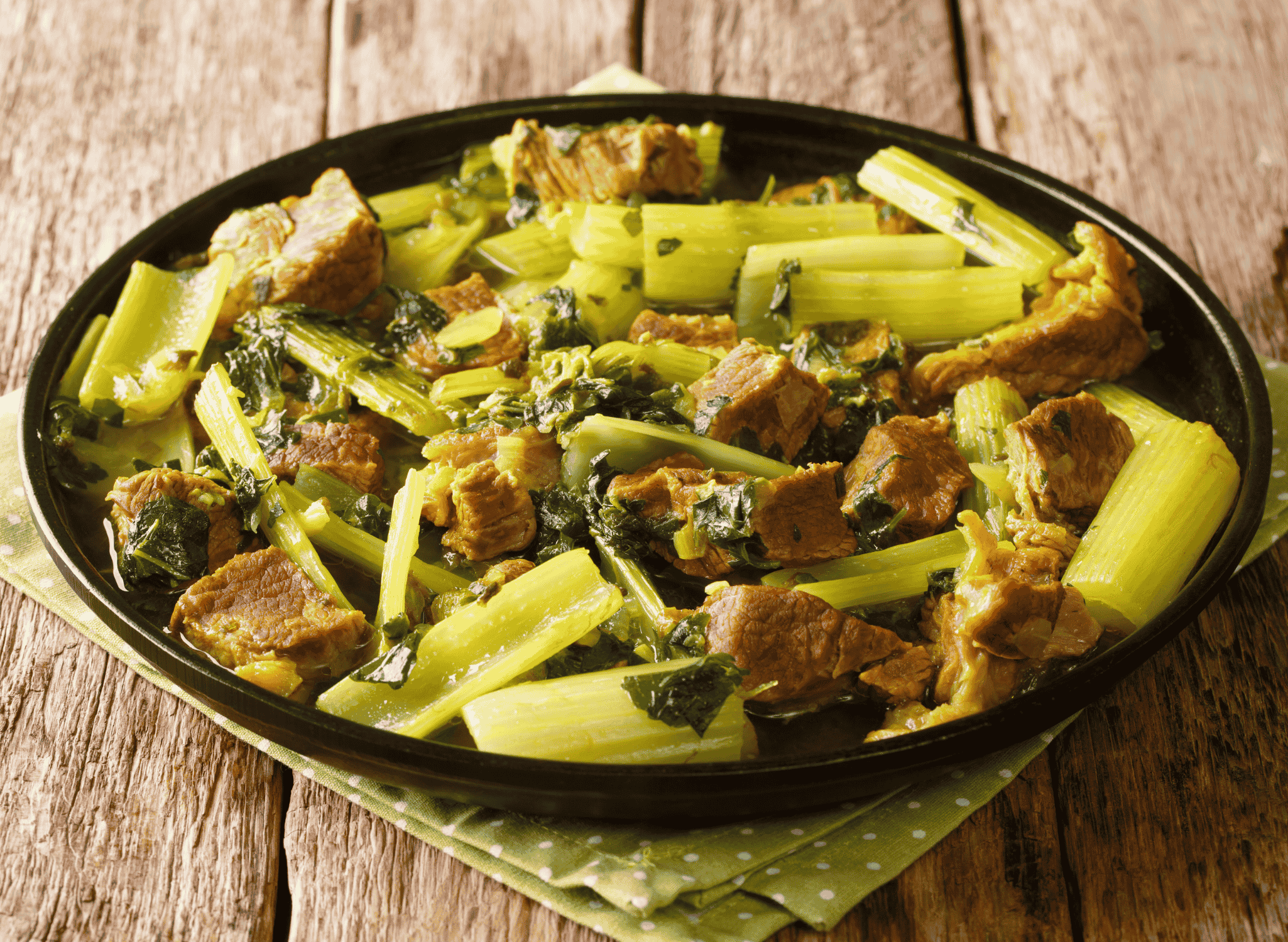
Khoresh Karafs is one of those Iranian stews that surprises people who think celery only belongs in soup or a salad. Here it becomes silky and savoury, scented with herbs and brightened with citrus. Served with steamed rice, it feels both comforting and clean on the palate.
If you enjoy dishes where sourness keeps rich flavours in check, you will get on well with this stew. It is not heavy, yet it has depth, especially when the celery is sautéed until sweet and the herbs are cooked down until they smell almost toasted.
In many Iranian homes, khoresh is not a single recipe but a family language. The same dish can taste slightly different from one kitchen to the next, depending on the herb balance, how tangy the stew is, and whether it is made with lamb, beef, or sometimes chicken.
Want to dive deeper into Iranian Cuisine? Don’t miss our post on Traditional Iranian Foods to Try
What Is Khoresh Karafs?
Khoresh Karafs is a herb and celery stew, usually made with pieces of meat simmered until tender, then finished with a lift of sourness from limoo amani or fresh lemon. Celery is the star, but it does not taste like raw celery. Cooking changes everything.
The texture is a big part of the appeal. The celery softens and absorbs the braising liquid, while still holding enough shape to feel satisfying. The sauce turns a muted green, glossy from herbs and slow cooking, and it clings to rice in a way that makes each spoonful feel complete.
You will often hear it described as a springtime dish because it tastes fresh and herbal. That said, it suits colder months too, especially when you want something warming that does not sit too heavily after dinner.
Ingredients and Taste
The backbone is celery, onions, and a generous mix of herbs, commonly parsley and mint, sometimes a little celery leaf. The herbs are sautéed, not just warmed through, which deepens their flavour and prevents the stew from tasting grassy or thin.
Meat is commonly lamb or beef, cut into stew sized pieces. Some cooks choose lamb for its richness, others prefer beef for a cleaner base. A little turmeric is typical for warmth and colour, with salt and black pepper doing steady work in the background.
Sourness is where the dish finds its sparkle. Dried limes, called limoo amani, are traditional and give a gently bitter tang. If those are hard to find, lemon juice can step in, though the flavour will be brighter and simpler.
The finished taste is layered. You get sweet onion, mellow celery, and herbs that feel both green and savoury. Then comes the tang, cutting through the stew and keeping you reaching for another bite. It is balanced rather than sharp, provided the sour element is added with care.
What surprises many first timers is how the celery changes. It loses its raw bite and becomes tender, almost buttery, with a faint sweetness. The herbs do not sit on top of the dish, they melt into it, turning the sauce into something fragrant and rounded.
A Taste of History
Khoresh as a category has deep roots in Iranian cooking, shaped by a love of slow simmering, careful seasoning, and the pairing of stew with rice. Many khoresh dishes rely on herbs, sour fruits, and measured spice, building flavour through technique rather than heat.
Khoresh Karafs sits within that tradition, using everyday produce in a way that feels thoughtful rather than fussy. Celery grows well in many regions, and herbs are central to Iranian kitchens, so it makes sense that a stew like this would develop and endure.
It is also a dish that reflects Iranian taste for contrast. A gentle richness from meat and oil meets a sour lift from citrus or dried lime. That play between savoury and tangy is familiar across Iranian stews, and it is part of why they feel so satisfying with plain rice.
Over time, the stew travelled through households more than cookbooks. People learned it by watching someone else sauté the herbs, smelling when they were ready, and tasting the broth until it felt right. That informal teaching is still how many classic Iranian dishes are kept alive.
How to Make Khoresh Karafs (Iranian Celery Stew)
Khoresh Karafs is a quietly elegant Iranian stew where celery takes centre stage, softened slowly in herbs, turmeric, and a gentle sour note from dried limes. The cooking is unhurried and rewards patience, allowing the flavours to settle into a deep, savoury harmony. See the recipe card at the bottom for printable directions
Ingredients
- 500 g lamb shoulder or lamb leg, cut into bite sized pieces
- 6 celery stalks with leaves, chopped into 2 cm pieces
- 1 large onion, finely chopped
- 1 bunch fresh parsley, finely chopped
- 1 bunch fresh mint, finely chopped
- 2 dried limes (limoo amani), pierced
- 1 tsp ground turmeric
- ½ tsp ground black pepper
- Salt, to taste
- 3 tbsp vegetable oil
- 750 ml water
Cooking Instructions
Step 1: Prepare the herbs
To begin, finely chop the parsley and mint, keeping the herbs fresh and vibrant. Heat 2 tablespoons of oil in a wide pan and gently fry the herbs over medium heat until fragrant and darkened slightly. Stir continuously to prevent burning, then set aside to use later in the stew.
Step 2: Brown the meat
In a heavy based pot, heat the remaining oil over medium heat. Add the chopped onion and cook until soft and lightly golden. Stir in the turmeric, then add the lamb pieces and brown them evenly on all sides to build a deep base flavour before moving to the next step.
Step 3: Season and seal
Season the meat with salt and black pepper, stirring well to coat each piece. Allow the lamb to cook for a few minutes until the spices bloom and the surface of the meat is well sealed, then prepare to add liquid.
Step 4: Begin simmering
Pour in the water and bring the pot to a gentle boil. Skim any foam from the surface, then reduce the heat, cover, and let the meat simmer slowly for 45 minutes, allowing it to soften gradually.
Step 5: Cook the celery
While the meat cooks, lightly sauté the chopped celery in a separate pan with a small splash of oil. Cook until slightly softened but still green, which preserves its flavour and texture before adding it to the stew.
Step 6: Combine celery and herbs
Add the sautéed celery and the fried herb mixture to the pot. Stir gently so the ingredients remain intact, then continue cooking to allow the flavours to merge.
Step 7: Add dried limes
Pierce the dried limes with a knife and add them to the stew. Press them lightly with a spoon once softened to release their tangy aroma. Cover and simmer for a further 45 minutes until the stew thickens and the lamb is tender.
Step 8: Taste and adjust
Check the seasoning, adjusting salt or sourness as needed. If a sharper flavour is preferred, gently crack one dried lime further and stir the liquid before continuing to the final stage.
Step 9: For serving
Remove the pot from the heat and let the stew rest for 10 minutes. Serve Khoresh Karafs hot alongside steamed basmati rice, allowing the stew to be spooned generously over the rice for balance and contrast.
Variations and Substitutions
- Meat: Beef stewing cuts can replace lamb, though lamb remains traditional.
- Herbs: Dried parsley and mint may be used if fresh herbs are unavailable, using half the quantity.
- Dried limes: Fresh lime juice can be substituted, added gradually at the end to control sharpness.
- Vegetarian option: Use mushrooms and chickpeas instead of meat, increasing herbs slightly for depth.
Cooking Tips for Perfect Khoresh Karafs
- Fry the herbs patiently to remove rawness without scorching them.
- Keep the simmer gentle to avoid breaking down the celery too much.
- Pierce dried limes early so their flavour infuses gradually rather than sharply.
- Let the stew rest before serving to allow the flavours to settle fully.
How to Store and Reheat
Cooling and packing
Let the stew cool to room temperature before storing, so steam does not turn the container lid into a rain cloud. Use an airtight box and press the celery below the surface of the sauce, which helps prevent drying and keeps flavours evenly distributed.
Fridge storage
In the fridge, Khoresh Karafs keeps well for about three to four days. Like many stews, it often tastes better the next day, once the herbs and sour notes have had time to settle into the sauce.
Freezing
This stew freezes reliably, especially if the celery has been cooked until tender but not collapsing. Freeze in portions, leaving a little space at the top of the container. It is best used within two to three months for cleaner flavour and texture.
Reheating on the hob
Reheat gently in a saucepan over a low to medium heat, stirring now and then so the herbs do not catch. Add a small splash of water if the sauce has thickened too much. Slow reheating keeps the celery intact and prevents the meat from drying.
Reheating in the microwave
Microwave reheating works for quick lunches. Cover loosely and heat in short bursts, stirring between rounds. This helps the stew warm evenly and stops the edges from overheating while the centre stays cool.
Adjusting seasoning after reheating
After reheating, taste before you add anything. Sourness can fade slightly in the fridge, so a squeeze of lemon may refresh it, but go gently. Salt may need a small tweak too, especially if you added extra liquid while warming it.
Serving again
Serve it with fluffy basmati rice, ideally with a little saffron rice on top if you enjoy that contrast. A side of salad herbs or pickles fits naturally, adding crunch and brightness alongside the soft stew.

Khoresh Karafs (Celery Stew)
Ingredients
- 500 g lamb shoulder or lamb leg cut into bite sized pieces
- 6 celery stalks with leaves chopped into 2 cm pieces
- 1 large onion finely chopped
- 1 bunch fresh parsley finely chopped
- 1 bunch fresh mint finely chopped
- 2 dried limes limoo amani, pierced
- 1 tsp ground turmeric
- ½ tsp ground black pepper
- Salt to taste
- 3 tbsp vegetable oil
- 750 ml water
Instructions
- To begin, finely chop the parsley and mint, keeping the herbs fresh and vibrant. Heat 2 tablespoons of oil in a wide pan and gently fry the herbs over medium heat until fragrant and darkened slightly. Stir continuously to prevent burning, then set aside to use later in the stew.
- In a heavy based pot, heat the remaining oil over medium heat. Add the chopped onion and cook until soft and lightly golden. Stir in the turmeric, then add the lamb pieces and brown them evenly on all sides to build a deep base flavour before moving to the next step.
- Season the meat with salt and black pepper, stirring well to coat each piece. Allow the lamb to cook for a few minutes until the spices bloom and the surface of the meat is well sealed, then prepare to add liquid.
- Pour in the water and bring the pot to a gentle boil. Skim any foam from the surface, then reduce the heat, cover, and let the meat simmer slowly for 45 minutes, allowing it to soften gradually.
- While the meat cooks, lightly sauté the chopped celery in a separate pan with a small splash of oil. Cook until slightly softened but still green, which preserves its flavour and texture before adding it to the stew.
- Add the sautéed celery and the fried herb mixture to the pot. Stir gently so the ingredients remain intact, then continue cooking to allow the flavours to merge.
- Pierce the dried limes with a knife and add them to the stew. Press them lightly with a spoon once softened to release their tangy aroma. Cover and simmer for a further 45 minutes until the stew thickens and the lamb is tender.
- Check the seasoning, adjusting salt or sourness as needed. If a sharper flavour is preferred, gently crack one dried lime further and stir the liquid before continuing to the final stage.
- Remove the pot from the heat and let the stew rest for 10 minutes. Serve Khoresh Karafs hot alongside steamed basmati rice, allowing the stew to be spooned generously over the rice for balance and contrast.



Leave a Review