- View
Soft, chewy, and quietly indulgent, mochi holds a special place in Japanese food culture. It looks simple at first glance, yet the texture invites attention, a gentle resistance that gives way to tender sweetness. Whether plain, filled, or toasted, it is a treat that rewards slow, mindful bites.
People often meet mochi through New Year offerings, yet it has drifted happily into daily life. You might find it tucked into ice cream, paired with strawberries, or grilled until the surface blisters. The pleasure lies in contrast, warm and toasty outside, soft and elastic within.
Mochi can be playful or ceremonial. It can star in a quiet tea break, or appear as a polished gift tied with careful ribbon. Its appeal crosses generations, because the experience begins with texture, then broadens into flavour, aroma, and memory that feels both fresh and traditional.
Want to dive deeper into Japanese Cuisine? Don’t miss our post on 26 Traditional Japanese Foods to Try
What Is a Mochi?
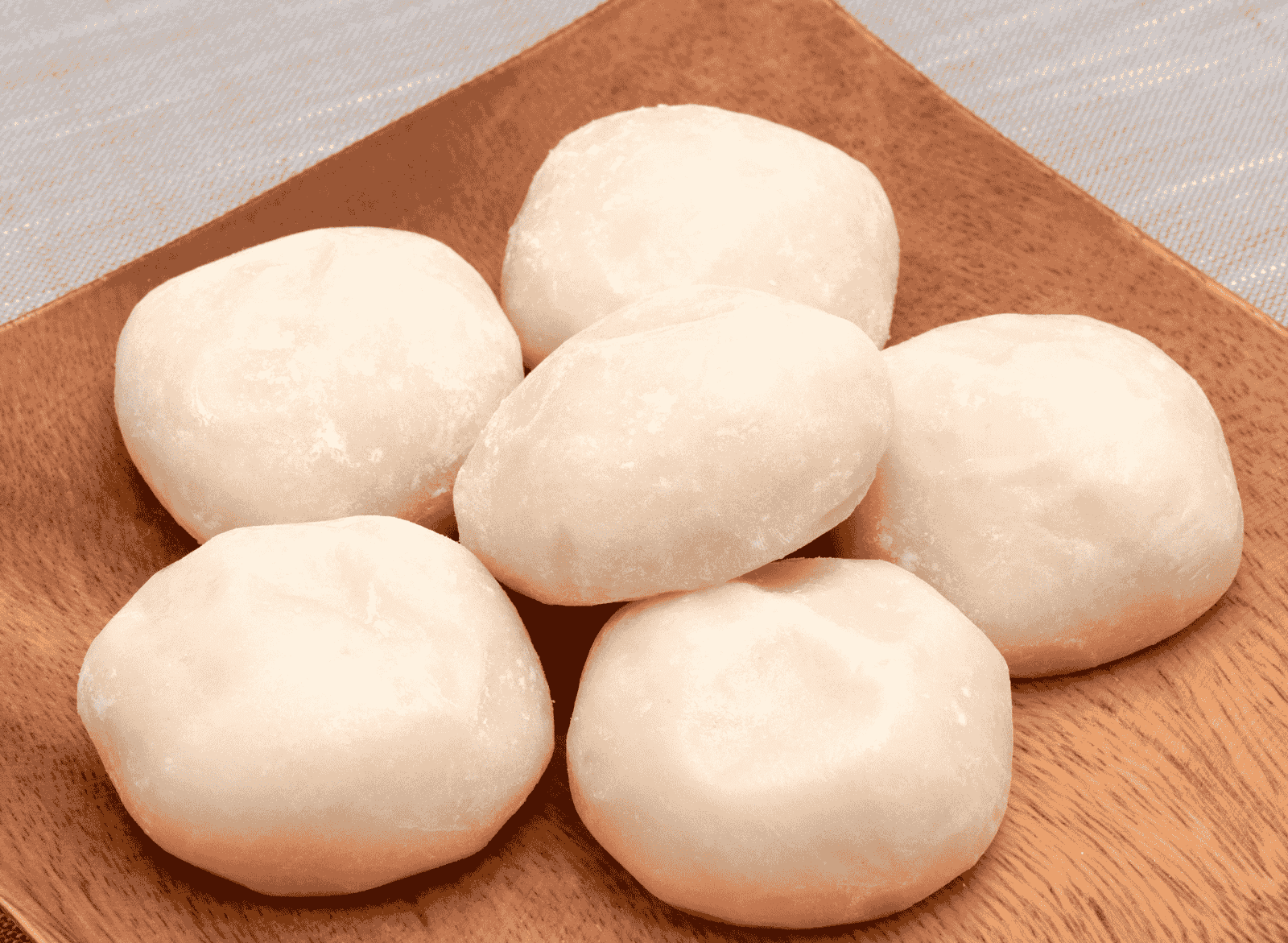
Mochi is a rice cake made from glutinous rice known as mochigome. The grains are soaked, steamed, then pounded while still hot until they form a smooth, stretchy mass. This paste is shaped into rounds or sheets, then served plain, dusted, filled, or toasted to coax out new textures.
Pounding matters. The act of mochitsuki brings cooperation and rhythm, one person turning the dough, another striking with a heavy mallet. Speed and timing create a glossy elasticity, while a dip in water keeps the paste from sticking. The result is springy, tender, and pleasingly elastic.
Styles vary across regions. Daifuku wraps mochi around sweet red bean paste. Kusa mochi mixes in mugwort for a fresh, grassy aroma. Kinako mochi is dusted in roasted soybean flour, which adds a nutty perfume. Savoury versions exist too, especially when mochi is grilled and sauced.
Ingredients and Taste
Good mochi starts with short grain glutinous rice, water, and patience. Some cooks use rice flour called shiratamako or mochiko for ease. For fillings, classic anko brings gentle sweetness. Strawberries, sesame paste, peanut butter, and custard all work, each one changing texture and perfume.
Plain mochi tastes mild, slightly sweet, and soft on the tongue. Toasting encourages a light crisp skin, while the interior stretches in long silky threads. Anko adds a mellow earthiness, strawberry adds brightness, sesame brings depth, and kinako gives a roasted, biscuit like character.
Balance is vital. The chew should feel lively, not rubbery, and the sweetness must sit comfortably. A dusting of potato starch or cornflour prevents sticking and keeps the finish clean. When served with green tea, the gentle bitterness of the brew steadies the sweetness and chew.
A Taste of History
Mochi stretches back centuries, with ties to Shinto ritual and agricultural rites. It appears at New Year as kagami mochi, two stacked rounds that symbolise renewal and good fortune. Pounding together builds community spirit, marking the season with rhythm, steam, and a bright sense of hope.
In earlier times, mochi carried status, served in ceremonies and temple offerings. Over time it travelled from sanctuaries into homes and stalls. Street vendors grilled it over charcoal, brushed it with soy and sugar, and passed it to customers on crisp winter evenings, hot and fragrant.
Modern mochi keeps that heritage while welcoming invention. Convenience stores sell tidy daifuku, cafés fold pieces into parfaits, and ice cream makers tuck frozen centres inside pliant skins. Through all these changes the heart remains the same, rice transformed by work, heat, and care.
How to Make Mochi (Rice Cake)
Mochi is a traditional Japanese rice cake made from glutinous rice that’s steamed, pounded, and shaped into soft, chewy rounds. It carries centuries of cultural significance, often enjoyed during New Year celebrations and festive gatherings. Making mochi at home is a hands-on experience that rewards patience and precision with delicate texture and subtle sweetness. See the recipe card at the bottom for printable directions
Ingredients
- 400 g glutinous rice (mochigome)
- Water for soaking and steaming
- Potato starch or cornflour, for dusting
- Optional: 3 tbsp sugar (for slightly sweet mochi)
- Optional: sweet red bean paste (anko) for filling
Cooking Instructions
Step 1: Prepare the rice
Rinse the glutinous rice thoroughly in cold water until the water runs clear. This removes excess starch and prevents stickiness during pounding. Soak the rice in water for at least 8 hours or overnight to soften the grains fully.
Step 2: Steam the rice
Drain the soaked rice and place it in a steamer lined with muslin or parchment. Steam for 25 to 30 minutes until the grains turn translucent and tender. Check halfway through to ensure even cooking, adding more water to the steamer if needed.
Step 3: Begin the pounding
Transfer the hot rice immediately into a large mortar (usu) or sturdy bowl while still steaming. Using a heavy pestle (kine) or a strong wooden spoon, begin to mash the rice rhythmically until it forms a sticky mass.
Step 4: Pound into a smooth dough
Continue pounding for about 10 minutes, wetting the pestle occasionally to prevent sticking. The goal is to create a smooth, elastic dough with no visible grains. This process develops mochi’s signature chewiness.
Step 5: Shape the mochi base
Dust a clean work surface with potato starch or cornflour. Transfer the hot mochi dough and flatten it gently using wet hands. Let it cool for a few minutes until comfortable to touch, then divide into equal portions.
Step 6: Shape individual pieces
For plain mochi, roll each portion into a small round shape. For filled mochi, flatten each piece, place a spoonful of red bean paste in the centre, and fold the dough around it, sealing the edges neatly.
Step 7: Prevent sticking
Dust the finished mochi generously with potato starch to stop them from sticking to each other or your hands. Remove any excess starch with a soft brush before serving.
Step 8: Serve and enjoy
Serve fresh mochi at room temperature with green tea or alongside seasonal fruit. They can also be lightly toasted or added to soups for a warm, comforting texture.
Variations and Substitutions
- Filling Options: Substitute red bean paste with matcha cream, sesame paste, or sweetened peanut butter for a twist.
- Flour Substitute: If potato starch is unavailable, use cornflour or rice flour for dusting.
- Cooking Method: Instead of steaming, mochi can be made from glutinous rice flour (shiratamako) mixed with water and steamed or microwaved for convenience.
- Sweet Version: Add sugar to the dough for dessert-style mochi.
Cooking Tips for Perfect Mochi
- Keep your hands and tools slightly wet when handling the dough to prevent sticking.
- Work quickly while the mochi is warm, as it becomes firmer when cooled.
- If using fillings, chill them beforehand so they are easier to wrap.
- Avoid over-pounding, which can make the dough tough rather than chewy.
- Use a silicone spatula if pounding by hand to avoid burns and ease shaping.
Mochi (Japanese Rice Cake)
Ingredients
- 400 g glutinous rice mochigome
- Water for soaking and steaming
- Potato starch or cornflour for dusting
- Optional: 3 tbsp sugar for slightly sweet mochi
- Optional: sweet red bean paste anko for filling
Instructions
- Rinse the glutinous rice thoroughly in cold water until the water runs clear. This removes excess starch and prevents stickiness during pounding. Soak the rice in water for at least 8 hours or overnight to soften the grains fully.
- Drain the soaked rice and place it in a steamer lined with muslin or parchment. Steam for 25 to 30 minutes until the grains turn translucent and tender. Check halfway through to ensure even cooking, adding more water to the steamer if needed.
- Transfer the hot rice immediately into a large mortar (usu) or sturdy bowl while still steaming. Using a heavy pestle (kine) or a strong wooden spoon, begin to mash the rice rhythmically until it forms a sticky mass.
- Continue pounding for about 10 minutes, wetting the pestle occasionally to prevent sticking. The goal is to create a smooth, elastic dough with no visible grains. This process develops mochi’s signature chewiness.
- Dust a clean work surface with potato starch or cornflour. Transfer the hot mochi dough and flatten it gently using wet hands. Let it cool for a few minutes until comfortable to touch, then divide into equal portions.
- For plain mochi, roll each portion into a small round shape. For filled mochi, flatten each piece, place a spoonful of red bean paste in the centre, and fold the dough around it, sealing the edges neatly.
- Dust the finished mochi generously with potato starch to stop them from sticking to each other or your hands. Remove any excess starch with a soft brush before serving.
- Serve fresh mochi at room temperature with green tea or alongside seasonal fruit. They can also be lightly toasted or added to soups for a warm, comforting texture.