- View
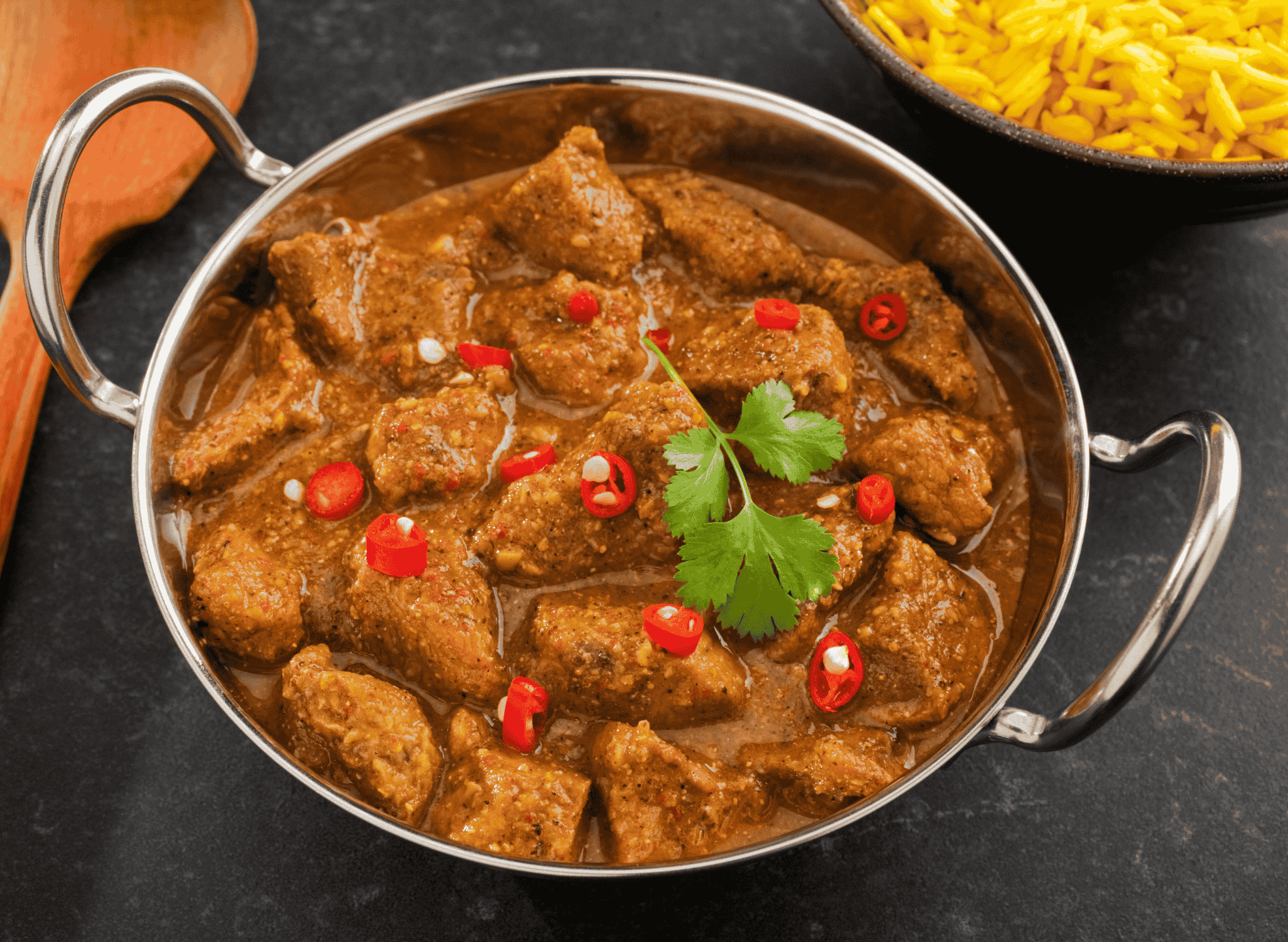
Vindaloo has earned itself quite a reputation, often misunderstood as simply the hottest curry on the menu. Yet this Goan speciality tells a far richer story than its fiery persona suggests, weaving together Portuguese colonial influence and Indian ingenuity.
This isn’t just about heat for the sake of heat. Authentic vindaloo balances sharp tanginess with complex spice layers, creating a curry that’s as nuanced as it is bold. The dish belongs to Goa’s unique culinary heritage, born from cultural exchange along India’s western coast.
In its homeland, vindaloo appears at celebrations and family gatherings, simmering away in clay pots whilst releasing aromas that draw everyone to the table. The curry pairs traditionally with pork, though chicken, lamb and even vegetables have found their way into modern versions.
What makes vindaloo truly special is how it manages to be both aggressive and refined. The vinegar’s acidity cuts through rich meat, whilst spices build layers of flavour that go far beyond simple chilli burn. This is food with personality and history in every spoonful.
Want to dive deeper into Indian Cuisine? Don’t miss our post on 34 Traditional Indian Foods to Try
What Is Vindaloo?
Vindaloo is a Goan curry distinguished by its potent combination of vinegar, garlic and fiery chillies. The dish emerged from Portuguese colonisers’ carne de vinha d’alhos, meaning meat marinated in wine and garlic, which Goan cooks transformed into something entirely their own.
The preparation involves marinating meat in a paste made from dried red chillies, vinegar and aromatics before cooking it down into a thick, intensely flavoured curry. Unlike many Indian curries that rely on cream or coconut, vindaloo gets its body from the spices themselves.
Traditional Goan vindaloo uses pork, reflecting Portuguese culinary habits that contrasted sharply with much of Hindu India’s predominantly vegetarian cuisine. The Christian communities of Goa embraced pork enthusiastically, making it central to their cooking traditions.
The curry’s defining characteristic is its sour heat rather than creamy richness. Vinegar provides sharp acidity that brightens the dish, preventing it from becoming heavy despite its bold spicing. This tanginess also acts as a preservative, allowing the curry to keep well in Goa’s tropical climate.
Modern restaurant versions often emphasise heat above all else, sometimes losing the balance that makes authentic vindaloo so compelling. Proper vindaloo should make you sweat, certainly, but it should also make you reach for another bite to explore its layered complexity.
Ingredients and Taste
The foundation of vindaloo begins with dried Kashmiri chillies, which provide colour and moderate heat without overwhelming ferocity. These get soaked and ground into a paste along with plenty of fresh garlic, creating the curry’s aromatic base that fills your kitchen with pungent promise.
Vinegar is absolutely essential, with many Goan cooks preferring palm vinegar or toddy vinegar for their distinctive flavour. This acidic element separates vindaloo from other Indian curries, giving it that characteristic tang that defines the dish and aids preservation.
Whole spices play crucial roles here. Cumin seeds, black peppercorns, cloves, cinnamon and sometimes mustard seeds get toasted and ground, building warmth and depth. Ginger adds sharp freshness, whilst tamarind occasionally appears to deepen the sourness further.
The meat, whether pork shoulder, chicken thighs or lamb, gets cut into generous chunks that can withstand long cooking. Onions break down into the gravy, thickening it naturally. Jaggery or sugar balances acidity with subtle sweetness, creating harmony amongst bold flavours.
Tasting vindaloo is an experience that unfolds in waves. First comes the hit of vinegar’s sharpness, clean and bracing. Then the chilli heat builds steadily, warming your mouth without the violent assault of some Western interpretations that prioritise pain over pleasure.
Garlic asserts itself strongly, mellowed by cooking but still present and powerful. The spices reveal themselves gradually, each one contributing its character to a complex whole. Beneath everything, the meat’s richness grounds the dish, absorbing flavours whilst contributing its own savoury depth.
What surprises many first-time tasters is how the tanginess keeps the curry from feeling heavy. Despite its intensity, vindaloo possesses a lightness that makes it surprisingly easy to eat, the vinegar cutting through richness and refreshing your palate between bites.
A Taste of History
Vindaloo’s story begins in the 16th century when Portuguese traders established colonies along India’s western coast. They brought with them carne de vinha d’alhos, a method of preserving meat in wine vinegar that suited long sea voyages and hot climates perfectly.
Goan cooks encountered this preservation technique and recognised its potential, but they transformed it completely. Wine became vinegar from local toddy palms. Garlic remained, but Indian spices flooded in, turning a simple Portuguese preserve into something far more complex and exciting.
The name itself evolved from “vinha d’alhos” into “vindaloo”, reflecting how thoroughly Goan cuisine had absorbed and reimagined this foreign import. Christian communities in Goa, facing no religious restrictions against pork, embraced the meat enthusiastically in their new creation.
By the 18th and 19th centuries, vindaloo had become firmly established in Goan Catholic households, particularly for festive occasions. The curry’s ability to keep well without refrigeration made it practical for Goa’s tropical heat, whilst its bold flavours made it celebratory rather than merely functional.
When Goans migrated to other parts of India and eventually abroad, they carried vindaloo with them. The curry entered British consciousness through Indian restaurants in the UK, though these versions often bore little resemblance to Goan originals, ramping up heat whilst losing complexity.
Today, vindaloo occupies an interesting position. In Britain, it represents extreme spiciness, a challenge for brave diners. In Goa, it remains a cherished part of cultural identity, connecting present day cooks to centuries of tradition and the unique fusion that defines Goan cuisine.
How to Make Vindaloo (Spicy and Tangy Meat Curry)
Vindaloo is one of India’s most fiery and flavourful curries, known for its balance of heat, tang, and aromatic spice. Originally inspired by a Portuguese dish, it has evolved in Goa into a rich, slow cooked curry where tender meat absorbs a punchy vinegar-based sauce. Patience and spice balance are key to mastering this dish. See the recipe card at the bottom for printable directions
Ingredients
For the marinade:
- 700 g boneless lamb or pork, cut into medium cubes
- 4 tbsp white vinegar
- 1 tsp salt
- 1 tsp turmeric powder
For the spice paste:
- 2 dried red chillies (Kashmiri if possible, for colour and mild heat)
- 1½ tsp cumin seeds
- 1½ tsp coriander seeds
- 1 tsp black peppercorns
- 1 tsp mustard seeds
- 4 cloves
- 1 small cinnamon stick
- 4 garlic cloves
- 2 cm piece fresh ginger, peeled and chopped
- 2 tbsp white vinegar
- 2 tbsp water
For the curry:
- 3 tbsp ghee or vegetable oil
- 2 medium onions, finely sliced
- 2 medium tomatoes, chopped
- ½ tsp chilli powder (adjust to taste)
- 1 tsp garam masala
- 250 ml water or stock
- Salt to taste
- Fresh coriander leaves, chopped (for garnish)
Cooking Instructions
Step 1: Marinate the Meat
In a large bowl, combine the meat with vinegar, salt, and turmeric powder. Mix well so each piece is coated evenly. Cover and let it marinate for at least 1 hour, or ideally overnight in the fridge for deeper flavour.
Step 2: Prepare the Spice Paste
Dry roast the chillies, cumin, coriander, peppercorns, mustard seeds, cloves, and cinnamon in a hot pan for 1 to 2 minutes until fragrant. Cool slightly, then grind with garlic, ginger, vinegar, and water to make a thick paste. Set aside for cooking.
Step 3: Brown the Onions
Heat ghee in a heavy bottomed pot over medium heat. Add the sliced onions and sauté until golden brown. Stir frequently to prevent burning, as this step develops the rich base of the curry.
Step 4: Add the Spice Paste
Add the prepared spice paste to the onions and cook for 2 to 3 minutes, stirring continuously. The paste should darken slightly and release its aroma, indicating the raw spice flavour has cooked out.
Step 5: Incorporate the Tomatoes and Seasonings
Stir in the chopped tomatoes, chilli powder, and garam masala. Cook until the tomatoes soften and the mixture turns into a thick masala paste. If it sticks, splash in a little water to keep it moving.
Step 6: Add the Marinated Meat
Transfer the marinated meat into the pan, stirring to coat each piece with the masala. Cook for 5 to 7 minutes until the meat begins to brown slightly and absorb the spices.
Step 7: Simmer the Curry
Pour in the water or stock, stir well, and bring to a gentle boil. Reduce the heat to low, cover the pot, and let the curry simmer for 45 to 60 minutes, or until the meat becomes tender and the sauce thickens beautifully.
Step 8: Adjust Seasoning
Taste and adjust the salt or heat to your liking. If the curry tastes too sharp, add a teaspoon of sugar to balance the vinegar’s tang.
Step 9: Rest Before Serving
Let the Vindaloo rest for 10 minutes off the heat before serving. This allows the flavours to deepen and settle.
Step 10: Serve and Garnish
Garnish with chopped coriander. Serve hot with steamed basmati rice or warm naan bread for a complete meal. Vindaloo pairs beautifully with a cooling yoghurt raita on the side.
Variations and Substitutions
- Meat options: Lamb, pork, chicken, or even beef work well. For a vegetarian version, use paneer or potatoes.
- Vinegar substitute: Malt vinegar can replace white vinegar for a slightly deeper tang.
- Chillies: If dried Kashmiri chillies are unavailable, use mild red chilli powder for colour and control the heat.
- Oil substitute: Sunflower oil can replace ghee if you prefer a lighter flavour.
Cooking Tips for Perfect Vindaloo
- Marinate the meat overnight for the most authentic, tender result.
- Dry roast the spices patiently to enhance their natural oils and aroma.
- Use Kashmiri chillies for vivid colour without overwhelming heat.
- Allow the curry to rest before serving to harmonise the tangy and spicy notes.
- Vindaloo often tastes even better the next day after the flavours develop further.
How to Store and Reheat
Storing Your Vindaloo
Vindaloo improves with time, its vinegar content acting as a natural preservative whilst allowing flavours to meld and deepen. Once cooled to room temperature, transfer the curry to an airtight container and refrigerate within two hours of cooking.
Properly stored, vindaloo keeps beautifully for four to five days in the refrigerator. The vinegar and spices prevent spoilage whilst the flavours continue developing, often tasting even better on day three than when freshly made. This makes it ideal for batch cooking and meal planning.
For longer storage, vindaloo freezes exceptionally well. Portion it into freezer safe containers, leaving some space for expansion, and it will maintain quality for up to three months. The vinegar helps preserve texture, preventing the mushy consistency that plagues some frozen curries.
Reheating for Best Results
Gentle reheating preserves vindaloo’s texture and prevents the meat from becoming tough or dry. The stovetop offers the best control. Transfer your curry to a heavy bottomed pan over medium to low heat, stirring occasionally to prevent sticking or scorching on the bottom.
Add a splash of water or stock if the gravy has thickened too much during storage. Vindaloo should have a coating consistency rather than being soupy, but it shouldn’t be so thick that it catches. Heat thoroughly until bubbling, then simmer for a few minutes.
Microwave reheating works adequately for single portions. Place the curry in a microwave safe bowl, cover loosely to prevent splattering, and heat in one-minute intervals. Stir between intervals to distribute heat evenly and prevent hot spots that can overcook the meat.
If reheating from frozen, defrost overnight in the refrigerator first for best results. Trying to reheat from frozen often leads to uneven heating, with scorching edges whilst the centre remains cold. Patience with proper thawing rewards you with better texture and flavour.
Indian Vindaloo (Spicy and Tangy Meat Curry)
Ingredients
For the marinade:
- 700 g boneless lamb or pork cut into medium cubes
- 4 tbsp white vinegar
- 1 tsp salt
- 1 tsp turmeric powder
For the spice paste:
- 2 dried red chillies Kashmiri if possible, for colour and mild heat
- 1½ tsp cumin seeds
- 1½ tsp coriander seeds
- 1 tsp black peppercorns
- 1 tsp mustard seeds
- 4 cloves
- 1 small cinnamon stick
- 4 garlic cloves
- 2 cm piece fresh ginger peeled and chopped
- 2 tbsp white vinegar
- 2 tbsp water
For the curry:
- 3 tbsp ghee or vegetable oil
- 2 medium onions finely sliced
- 2 medium tomatoes chopped
- ½ tsp chilli powder adjust to taste
- 1 tsp garam masala
- 250 ml water or stock
- Salt to taste
- Fresh coriander leaves chopped (for garnish)
Instructions
- In a large bowl, combine the meat with vinegar, salt, and turmeric powder. Mix well so each piece is coated evenly. Cover and let it marinate for at least 1 hour, or ideally overnight in the fridge for deeper flavour.
- Dry roast the chillies, cumin, coriander, peppercorns, mustard seeds, cloves, and cinnamon in a hot pan for 1 to 2 minutes until fragrant. Cool slightly, then grind with garlic, ginger, vinegar, and water to make a thick paste. Set aside for cooking.
- Heat ghee in a heavy bottomed pot over medium heat. Add the sliced onions and sauté until golden brown. Stir frequently to prevent burning, as this step develops the rich base of the curry.
- Add the prepared spice paste to the onions and cook for 2 to 3 minutes, stirring continuously. The paste should darken slightly and release its aroma, indicating the raw spice flavour has cooked out.
- Stir in the chopped tomatoes, chilli powder, and garam masala. Cook until the tomatoes soften and the mixture turns into a thick masala paste. If it sticks, splash in a little water to keep it moving.
- Transfer the marinated meat into the pan, stirring to coat each piece with the masala. Cook for 5 to 7 minutes until the meat begins to brown slightly and absorb the spices.
- Pour in the water or stock, stir well, and bring to a gentle boil. Reduce the heat to low, cover the pot, and let the curry simmer for 45 to 60 minutes, or until the meat becomes tender and the sauce thickens beautifully.
- Taste and adjust the salt or heat to your liking. If the curry tastes too sharp, add a teaspoon of sugar to balance the vinegar’s tang.
- Let the Vindaloo rest for 10 minutes off the heat before serving. This allows the flavours to deepen and settle.
- Garnish with chopped coriander. Serve hot with steamed basmati rice or warm naan bread for a complete meal. Vindaloo pairs beautifully with a cooling yoghurt raita on the side.