


- View
Borani Bademjan is one of those dishes that makes you pause after the first bite, because it tastes both comforting and carefully put together. Silky aubergine meets cool yoghurt, with garlic and herbs keeping everything lively. It is often served as a starter, a side, or part of a spread.
In many Iranian homes it turns up when guests are expected, since it is easy to share and even better when it has had time to sit. You scoop it with bread, you spoon it next to rice, you add it to grilled meats, and suddenly the table feels fuller without any fuss.
If you are new to Iranian cooking, this is a friendly place to begin. The ingredients are familiar, yet the end result feels distinctive. It is creamy without being heavy, and the aubergine brings a gentle sweetness that plays well with tangy yoghurt.
Want to dive deeper into Iranian Cuisine? Don’t miss our post on Traditional Iranian Foods to Try
What Is Borani Bademjan?
Borani Bademjan is a dip and side dish made from cooked aubergine mixed with thick yoghurt. The aubergine is usually fried or roasted until soft, then combined with garlic and seasoning. It is served chilled or at cool room temperature, often with a drizzle of oil on top.
The word borani refers to a family of dishes that pair yoghurt with cooked vegetables. You will find versions with spinach, beetroot, or squash, yet the aubergine one is particularly popular because it turns rich and velvety once cooked down. It feels familiar, yet it does not fade into the background.
Texture matters here. Aubergine breaks down into a soft mash, while yoghurt keeps the mixture smooth and slightly airy. Some cooks leave small pieces for bite, others blend it more fully. Either way, it should be easy to scoop, not watery, and pleasantly rounded on the tongue.
Ingredients and Taste
Aubergines are the heart of the dish, and they do best when cooked until their flesh is tender and lightly browned. Many recipes use frying for depth, while roasting gives a cleaner finish. Thick strained yoghurt is important too, since it keeps the dip creamy rather than loose and runny.
Garlic brings a steady warmth, not a sharp punch, especially if it is crushed finely and mixed through well. Dried mint is common, and sometimes fresh herbs are added for brightness. A pinch of salt and a little black pepper are usually enough, because the aubergine and yoghurt carry plenty of flavour.
The taste is a quiet conversation between smoky sweetness and cool tang. Aubergine can taste almost buttery when properly cooked, and yoghurt gives it a clean, sour edge that stops it feeling flat. Mint lifts the aroma, and garlic sits underneath like a low, steady hum.
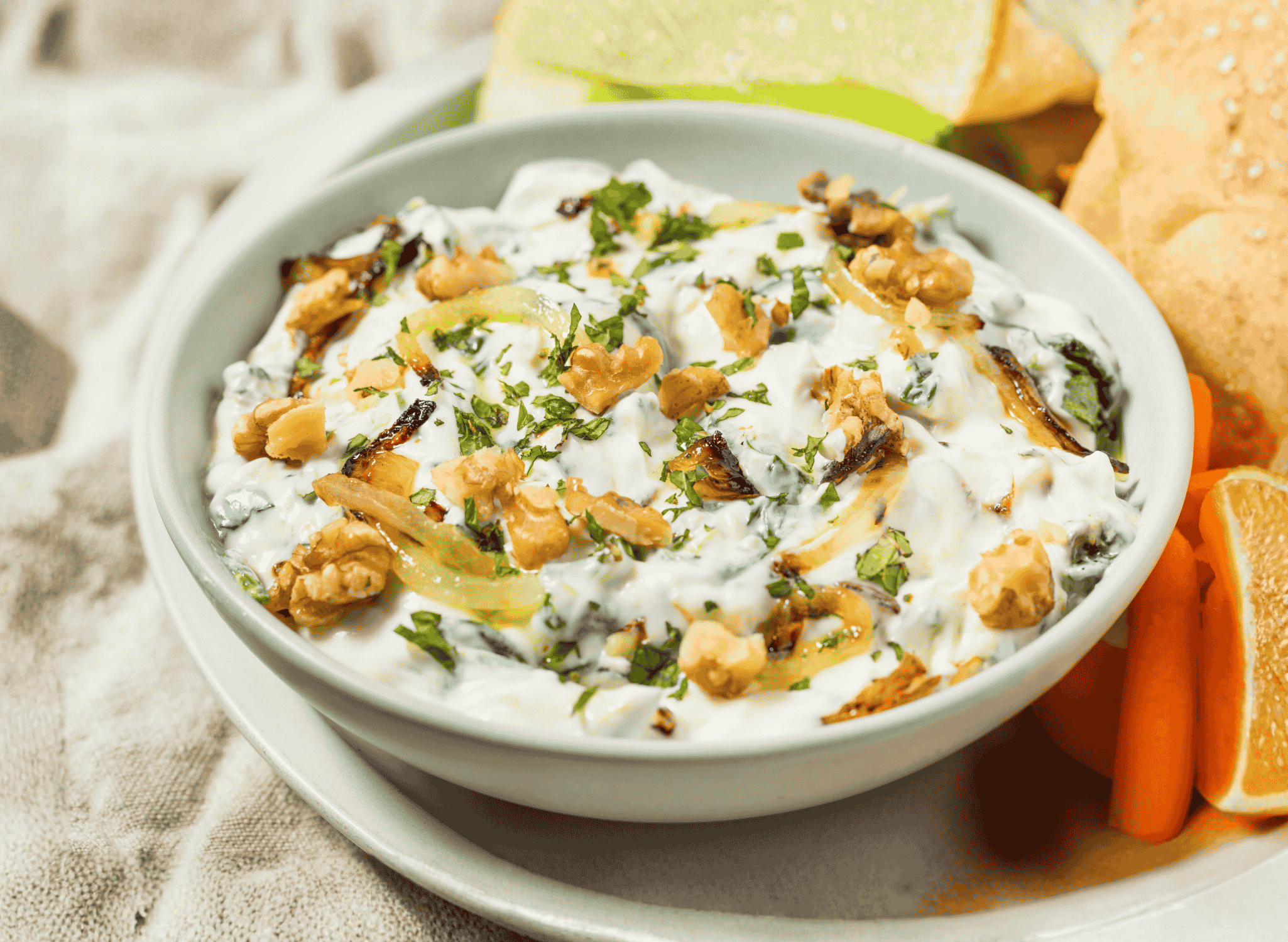
Toppings vary by household. A drizzle of olive oil is common, and some people add a pinch of dried mint warmed briefly in oil to deepen its scent. Others finish with walnuts for crunch, or pomegranate seeds for sparkle. None of these are required, yet each can shift the mood.
A Taste of History
Yoghurt has long been a staple across Iran, valued for both flavour and practicality in warm climates. Pairing it with vegetables is an old idea, and borani dishes reflect a style of cooking that prizes balance. Cool dairy, cooked veg, and herbs create food that feels soothing, not dull.
Aubergine itself has a deep history in Persian kitchens, appearing in stews, spreads, and fried dishes that turn it sweet and soft. Over time, cooks found that yoghurt offered a neat counterpoint. The result is a dish that suits both everyday meals and guest tables, depending on how it is dressed.
Borani Bademjan also fits neatly into the culture of shared eating. Iranian meals often include several small plates, encouraging people to taste a bit of everything. A yoghurt based dip brings relief between richer bites, and it works as a bridge between grilled foods, rice, pickles, and fresh herbs.
How to Make Borani Bademjan (Yogurt Eggplant Dip)
Borani Bademjan is a refined Iranian appetiser built on roasted aubergine, thick yoghurt, and gentle aromatics. Some households keep it light and sharp, while others enrich it with softly caramelised onions for added depth. Both approaches are traditional, and this recipe allows for either. See the recipe card at the bottom for printable directions
Ingredients
- 2 large aubergines
- 250 g full fat strained yoghurt
- 2 tbsp olive oil
- 2 garlic cloves, finely grated
- 1 tbsp dried mint
- Salt, to taste
Optional but traditional
- 1 medium onion, thinly sliced
- Extra olive oil for frying
Optional garnish
- Crushed walnuts
- Extra dried mint or a drizzle of olive oil
Cooking Instructions
Step 1: Roast the aubergines
To begin, preheat your oven to 200°C (180°C fan). Prick the aubergines several times and place them on a lined tray. Roast for 35 to 40 minutes, turning once, until the skins blister and the flesh collapses fully. Set aside to cool before handling.
Step 2: Peel and drain the aubergines
Remove and discard the skins, then place the soft flesh into a sieve set over a bowl. Press gently to release excess liquid. This step is essential for a thick, well balanced dip.
Step 3: Prepare the optional onions
If using onions, heat a little olive oil in a pan over low heat. Add the sliced onion with a pinch of salt and cook slowly for 15 to 20 minutes until soft and golden. Avoid browning. Remove from the heat and allow to cool slightly before combining.
Step 4: Chop the aubergine
Finely chop the drained aubergine with a knife rather than a blender. This preserves texture, which is key to a traditional Borani. Transfer to a mixing bowl.
Step 5: Make the garlic oil
Warm the olive oil in a small pan over low heat. Add the grated garlic and cook gently for about 30 seconds until fragrant but pale. Remove immediately to prevent bitterness.
Step 6: Combine aubergine and yoghurt
Add the yoghurt to the chopped aubergine and mix gently. Pour in the warm garlic oil and season with salt. Stir carefully until smooth but not loose.
Step 7: Add onions and mint
Fold in the caramelised onions if using, followed by the dried mint. Taste and adjust seasoning, keeping the flavours soft and balanced.
Step 8: Rest the borani
Cover and refrigerate for at least 20 minutes. This resting period allows the yoghurt and aubergine to settle and develop a unified flavour.
Step 9: Serve and finish
Spoon the Borani Bademjan into a shallow dish. Garnish with walnuts or extra mint if desired, and serve with warm flatbread or alongside other Persian dishes.
Variations and Substitutions
- Yoghurt: Greek yoghurt can be used if strained for at least 30 minutes
- Aubergine cooking: Char over an open flame for a smokier result
- Mint: Fresh mint may replace dried, finely chopped and used sparingly
- Onions: May be omitted entirely for a lighter, sharper borani
Cooking Tips for Perfect Borani Bademjan
- Always drain aubergine thoroughly to prevent a watery dip
- Keep garlic pale and gentle to preserve sweetness
- Caramelise onions slowly for depth without bitterness
- Serve cool or at room temperature for best texture
How to Store and Reheat
Cooling it safely
Let Borani Bademjan cool fully before it goes into the fridge. Warm aubergine can thin the yoghurt and encourage condensation, which leads to a watery layer on top. Once cooled, give it a final stir, then cover it well so it does not pick up other fridge smells.
In the fridge
Store it in a sealed container and aim to eat it within three days. It often tastes better on day two because the garlic and mint settle into the yoghurt. If you see liquid pooling, do not panic, just pour it off or stir it back in until it looks creamy again.
Freezing
Freezing is possible, yet the texture will change. Yoghurt can split after thawing, leaving a grainy feel. If you still want to freeze it, do so without toppings and thaw it slowly in the fridge. After thawing, whisk vigorously, and consider adding a spoon of fresh yoghurt to smooth it out.
Reheating and serving
Borani Bademjan is usually served cold or slightly cool, so reheating is rarely needed. If you prefer it warmer, heat only the aubergine portion before mixing with yoghurt, or warm it very gently and stir often to prevent splitting. Finish with fresh herbs and oil just before serving.

Borani Bademjan (Yogurt Eggplant Dip)
Ingredients
- 2 large aubergines
- 250 g full fat strained yoghurt
- 2 tbsp olive oil
- 2 garlic cloves finely grated
- 1 tbsp dried mint
- Salt to taste
Optional but traditional
- 1 medium onion thinly sliced
- Extra olive oil for frying
Optional garnish
- Crushed walnuts
- Extra dried mint or a drizzle of olive oil
Instructions
- To begin, preheat your oven to 200°C (180°C fan). Prick the aubergines several times and place them on a lined tray. Roast for 35 to 40 minutes, turning once, until the skins blister and the flesh collapses fully. Set aside to cool before handling.
- Remove and discard the skins, then place the soft flesh into a sieve set over a bowl. Press gently to release excess liquid. This step is essential for a thick, well balanced dip.
- If using onions, heat a little olive oil in a pan over low heat. Add the sliced onion with a pinch of salt and cook slowly for 15 to 20 minutes until soft and golden. Avoid browning. Remove from the heat and allow to cool slightly before combining.
- Finely chop the drained aubergine with a knife rather than a blender. This preserves texture, which is key to a traditional Borani. Transfer to a mixing bowl.
- Warm the olive oil in a small pan over low heat. Add the grated garlic and cook gently for about 30 seconds until fragrant but pale. Remove immediately to prevent bitterness.
- Add the yoghurt to the chopped aubergine and mix gently. Pour in the warm garlic oil and season with salt. Stir carefully until smooth but not loose.
- Fold in the caramelised onions if using, followed by the dried mint. Taste and adjust seasoning, keeping the flavours soft and balanced.
- Cover and refrigerate for at least 20 minutes. This resting period allows the yoghurt and aubergine to settle and develop a unified flavour.
- Spoon the Borani Bademjan into a shallow dish. Garnish with walnuts or extra mint if desired, and serve with warm flatbread or alongside other Persian dishes.





Leave a Review