
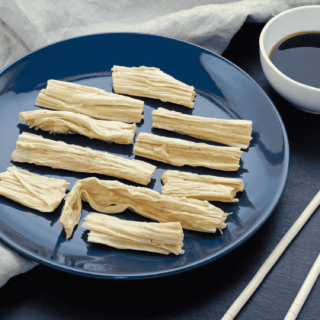
Japanese Yuba (Tofu Skin)
Yuba, or tofu skin, is a traditional Japanese delicacy made by gently lifting the delicate film formed on heated soy milk. Soft, silky, and rich in natural soy flavour, it is enjoyed fresh or in soups and appetisers.
Ingredients
- 1 litre unsweetened soy milk high protein, around 10% solids
- 1 tbsp water for adjusting consistency if needed
- Soy sauce for dipping (optional)
- Wasabi or grated ginger for serving (optional)
Instructions
- Pour the soy milk into a wide, shallow pan such as a stainless steel sauté pan or a traditional yuba pan. Avoid non-stick surfaces, as the skin forms better on metal. Place the pan over very low heat to prevent scorching.
- Warm the soy milk until small bubbles form around the edges but do not allow it to boil. The ideal temperature is about 80°C. At this point, the protein begins to coagulate and a thin film forms on the surface.
- Let the soy milk sit undisturbed for about 5 to 7 minutes. A smooth, elastic skin will begin to form. Gently touch it with chopsticks or your fingertips to test its firmness. It should lift slightly without tearing.
- Once the yuba skin appears firm and slightly translucent, use a pair of chopsticks to lift it carefully from one edge, pulling upwards in a slow, steady motion. Allow any excess soy milk to drip back into the pan.
- Hang the lifted yuba over a rod or rest it on a clean edge for a few seconds to drain. This helps the sheet firm up and become easier to handle. You can also lay it flat on a tray lined with parchment.
- Allow a new film to form on the surface of the soy milk. Each batch takes about 5 to 7 minutes. Repeat until most of the soy milk has been used. You should get 6 to 8 sheets from one litre, depending on thickness.
- Place the collected sheets in a single layer on a plate to cool slightly. If you prefer soft yuba, keep them moist. For firmer sheets, let them air dry longer or chill briefly in the refrigerator.
- Serve the fresh yuba with a small dish of soy sauce and a dab of wasabi or grated ginger. It can also be added to soups or rolled around vegetables for an elegant appetiser.
- If not serving immediately, wrap the yuba in cling film or place it in an airtight container. Store in the fridge for up to two days. Gently steam or soak in warm water to soften before using again.
- Enjoy the delicate layers of yuba as they melt lightly on the tongue, carrying the subtle sweetness of soy. It’s a reminder that the simplest ingredients often hold the deepest flavour.
Nutrition
Serving: 1Calories: 0.1kcalCarbohydrates: 0.01gProtein: 0.01gFat: 0.01gPolyunsaturated Fat: 0.003gSodium: 0.3mgPotassium: 0.3mgVitamin A: 1IUCalcium: 0.4mg
Tried this recipe?Let us know how it was!