
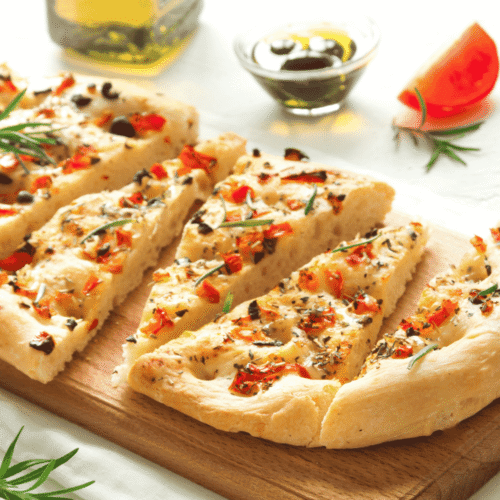
Italian Focaccia (Herbed Bread) Recipe
Italian Focaccia is a traditional flatbread known for its soft, airy interior and crisp, golden crust. Infused with olive oil and often topped with herbs like rosemary or thyme, it's a versatile accompaniment to various dishes or delightful on its own.
Ingredients
- 300 g strong white bread flour
- 1 tsp fine sea salt
- 7 g instant yeast
- 200 ml warm water
- 2 tbsp extra virgin olive oil plus extra for drizzling
- 1 tsp sugar
- 1 tbsp fresh rosemary finely chopped (or 1 tsp dried rosemary)
- Flaky sea salt for sprinkling
Instructions
- In a large bowl, combine the warm water, sugar, and yeast. Stir lightly and leave for 10 minutes until frothy. This activates the yeast and ensures the dough will rise properly.
- Add the flour and fine sea salt to the yeast mixture, then pour in the olive oil. Mix with your hand or a wooden spoon until a sticky dough forms. The dough should feel soft but not wet.
- Transfer the dough onto a lightly floured surface and knead for about 10 minutes until smooth and elastic. Alternatively, use a mixer with a dough hook for 6–7 minutes. When pressed with a finger, the dough should spring back slightly.
- Lightly oil a clean bowl, place the dough inside, and cover with a damp cloth. Leave to rise in a warm place for about 1 hour, or until doubled in size. Avoid draughty areas to maintain even rising.
- Grease a 20 x 30 cm baking tin with olive oil. Once the dough has risen, gently deflate it with your hands and stretch it to fit the tin. Press evenly to create a uniform thickness.
- With your fingertips, press deep indentations all over the dough surface. These dimples will hold pools of oil and herbs, which help flavour and texture the crust.
- Cover the tin with a cloth and leave to rise again for about 30 minutes. This second rise ensures a soft and airy crumb while maintaining the bread’s structure.
- Preheat the oven to 220°C (200°C fan). Drizzle the top of the dough generously with olive oil, sprinkle with rosemary, and finish with a pinch of flaky sea salt. Press lightly so the herbs cling to the surface.
- Bake for 20–25 minutes until golden brown and slightly crisp on top. The base should sound hollow when tapped, indicating it is baked through.
- Remove from the oven and drizzle with a final touch of olive oil. Slice into squares or strips and serve warm. Focaccia pairs beautifully with soups, cheeses, or simply dipped in balsamic vinegar.
Nutrition
Serving: 1Calories: 345kcalCarbohydrates: 59gProtein: 8gFat: 8gSaturated Fat: 1gPolyunsaturated Fat: 1gMonounsaturated Fat: 5gSodium: 584mgPotassium: 101mgFiber: 3gSugar: 1gVitamin A: 15IUVitamin C: 0.1mgCalcium: 14mgIron: 4mg
Tried this recipe?Let us know how it was!