
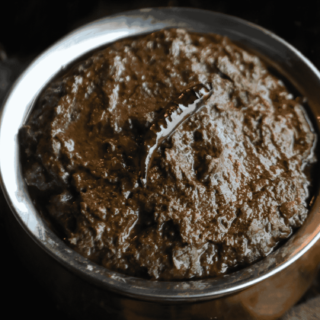
Indian Saag (Leafy Green Curry)
A traditional Indian saag made with spinach, mustard, and fenugreek leaves simmered with aromatic spices, creating a rich and earthy curry perfect with makki di roti or steamed basmati rice.
Ingredients
- 300 g spinach leaves
- 200 g mustard greens sarson
- 100 g fenugreek leaves methi
- 1 large onion finely chopped
- 2 medium tomatoes chopped
- 2 green chillies chopped
- 1 tbsp grated ginger
- 1 tbsp minced garlic
- 1 tsp cumin seeds
- 1 tsp turmeric powder
- 1 tsp coriander powder
- ½ tsp red chilli powder adjust to taste
- 3 tbsp ghee or mustard oil
- 2 tbsp maize flour makki ka atta or cornmeal
- 1 cup water adjust for consistency
- Salt to taste
- 2 tbsp fresh cream or butter for garnish, optional
Instructions
- Rinse the spinach, mustard, and fenugreek leaves thoroughly in cold water to remove any grit. Roughly chop the greens and set aside. Preparing them fresh preserves their vibrant flavour and texture.
- In a large pot, bring salted water to a boil and add all the greens along with the green chillies. Simmer for 10–12 minutes until tender. Drain and cool slightly, then blend into a coarse purée. Set aside for later use.
- Heat ghee or mustard oil in a heavy bottomed pan over medium heat. Add cumin seeds and allow them to sizzle until fragrant. Then, stir in the chopped onions and sauté until golden brown. This step builds the foundation of flavour for the saag.
- Stir in the ginger and garlic, cooking until the raw aroma fades. Add the chopped tomatoes and cook until soft and the oil begins to separate from the mixture. This signals that the masala is perfectly cooked.
- Add turmeric, coriander, and red chilli powder. Stir well to coat the mixture evenly. Sprinkle in the maize flour, stirring continuously to prevent lumps. This will help thicken the saag and give it a traditional, hearty texture.
- Add the blended greens to the pan, along with salt and about one cup of water. Mix thoroughly, ensuring the spices are evenly distributed. Reduce the heat and simmer gently for 15–20 minutes to allow the flavours to develop fully.
- If the saag appears too thick, add a splash of warm water to reach your preferred consistency. For a creamier result, stir in a spoonful of butter or cream towards the end of cooking.
- Taste and adjust salt or spice levels if needed. Some traditional cooks like to finish with a drizzle of melted ghee on top to deepen the flavour.
- Transfer the saag to a serving bowl, topping with a dollop of butter or cream for richness. Serve hot with makki di roti (corn flatbread) or steamed basmati rice.
- Garnish with a few sautéed garlic slices or a sprinkle of chilli flakes for a rustic touch. Saag thickens as it rests, so reheat gently with a splash of water before serving if needed.
Nutrition
Serving: 1Calories: 187kcalCarbohydrates: 18gProtein: 6gFat: 12gSaturated Fat: 1gPolyunsaturated Fat: 3gMonounsaturated Fat: 6gSodium: 157mgPotassium: 854mgFiber: 6gSugar: 5gVitamin A: 9138IUVitamin C: 70mgCalcium: 165mgIron: 4mg
Tried this recipe?Let us know how it was!